Miami Tour Guides
Miami Tour Guides
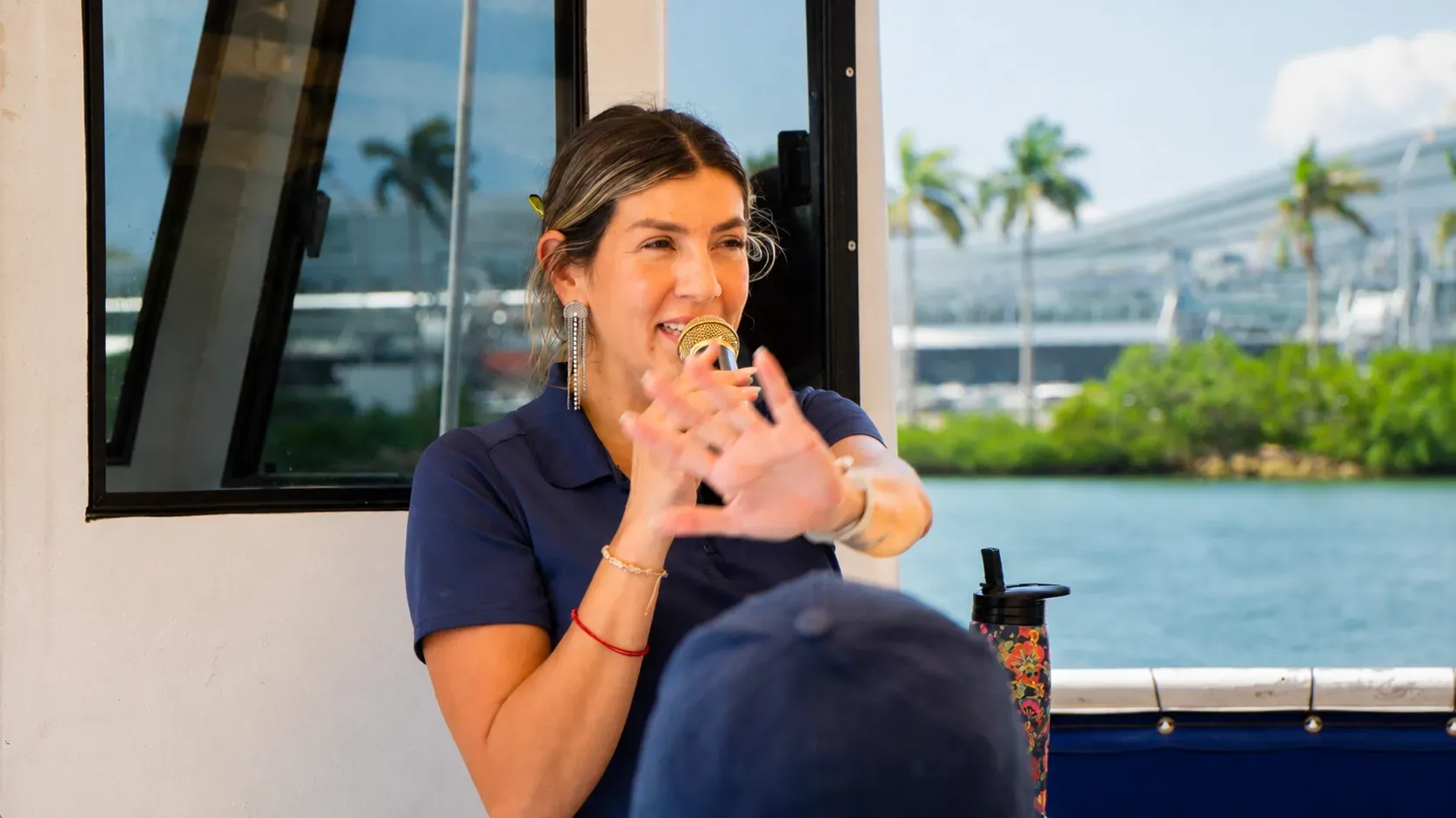
The route may be the same. The audience never is.
Miami Tour Guides do much more than point out landmarks and memorize facts. The best guides know how to take a group of complete strangers from different countries, cultures, and backgrounds and turn them into an audience that is listening, laughing, learning, and experiencing Miami together.
We see that human connection every day on our Miami Boat Tours. A guide can know the route and the history, but that alone doesn't make someone great. They need personality, confidence, timing, crowd awareness, professionalism, and the ability to think fast when something unexpected happens.
And then there is safety. A guide can be in the middle of a great story, notice conditions changing around them, and immediately know when the entertainment needs to stop and everyone's attention needs to shift to safety. Great guides don't just read the crowd. They read the environment.
That's why we believe live narration still matters. A recording can repeat a story. Technology can provide information. But neither replaces the spontaneous human interaction between a guide and the guests standing in front of them.
Anybody can tell a joke. Anybody can memorize a few facts. A professional Miami tour guide has to know the history, entertain the audience, respect the guests, understand the experience, and be prepared for what happens next.
In many ways, they're part historian, part entertainer, part safety professional, and part actor.
Because a great tour guide doesn't simply show you Miami. They let you experience it through someone else's eyes.
What Makes a Great Miami Tour Guide?
Being funny is not enough. A professional Miami tour guide needs to know how to entertain strangers while staying in control of the experience. Personality matters, but so do knowledge, confidence, awareness, and safety.
The best tour guides in Miami understand that every group is different. Guests arrive from around the world with different personalities, cultures, languages, and expectations. A great guide knows how to read that crowd and adjust without making the experience feel scripted.
Here are the qualities we believe separate a good guide from a great one:
- Personality: A guide needs a personality people want to listen to. They should be able to have fun, play music when appropriate, tell stories, and create energy without forcing it.
- Confidence: When you're holding a microphone in front of people you've never met, you have to own the moment. Great guides speak clearly, think fast, and communicate with confidence.
- Knowledge: Anybody can tell a joke. A professional guide needs to know Miami's history and fully understand the experience they're leading. Entertainment gets people's attention; knowledge gives the experience value.
- Crowd control: Being in control doesn't mean being rude. It means being polite, respectful, and assertive when necessary. One difficult guest or family should never be allowed to ruin the experience for everyone else.
- Situational awareness: A guide can't focus only on the microphone. They need to pay attention to the guests and everything happening around them. Conditions can change quickly, and knowing when to stop entertaining and address something important is part of being a professional.
- Safety: Nothing is more important. Guides need proper training and must understand the safety responsibilities connected to the specific experience they're leading.
- Communication: English and Spanish are especially important in Miami. If guests cannot understand the guide, they're missing the stories, history, instructions, and ultimately part of the experience.
- Professionalism: Being on time matters. Appearance matters. Hygiene matters. A guide represents the company before they ever say their first word. Looking professional and taking pride in yourself creates a completely different first impression.
- Common sense: Not every situation has a script. Sometimes an unhappy guest needs more attention; sometimes they need less. Experienced local Miami guides learn how to judge the situation and keep the overall experience moving in the right direction.
- Entertainment: In some ways, great guides are actors. Every day they're stepping in front of a new audience of strangers and putting on a live performance. The difference is that they also have to teach, communicate, observe, and keep everyone safe.
Training can teach history, routes, procedures, and safety standards. But some qualities have to come from the individual. The personality, pride, awareness, and desire to entertain people are what can turn a trained guide into an unforgettable one.
Why Live Miami Tour Guides Make a Difference
Technology can provide information, and prerecorded narration can tell a story. But sightseeing is about more than hearing facts. A live Miami tour guide can see the guests, understand the mood, react to what's happening, and change the experience in real time.
That's the human touch.
The Route Is Planned, but the Conversation Is Not
Every experience has a route or itinerary, but every audience brings something different to it.
One group may have families with children. Another may include couples, international travelers, or locals who already know Miami. Some guests want history. Others love celebrity stories. Some groups want to laugh from beginning to end.
A professional guide recognizes those differences and works with them instead of delivering the exact same performance to everyone.
A Recording Cannot Read the Crowd
Great tour guides in Miami pay attention to reactions.
If people are laughing, the guide knows when to keep the energy going. If guests become interested in a particular story, they can go deeper. When someone asks a good question, the conversation can suddenly move in a completely different direction.
Sometimes more interaction is better. Other times, less is more.
Knowing the difference requires common sense and experience.
Live Narration Creates the Human Touch
Miami welcomes people from different countries, cultures, and backgrounds. That can create conversations a recording could never predict.
A local Miami guide can ask guests where they're from, engage different nationalities, switch between English and Spanish when appropriate, answer questions, and make people feel like they're part of the experience instead of simply listening to it.
That's when guiding becomes fun.
Great Guides Pay Attention to More Than the Microphone
Engagement can never come at the expense of awareness.
A guide may be telling a story one second and need everyone's attention the next. If conditions around the group change, the guide has to recognize it quickly and respond calmly.
That's why great guides don't only read their audience.
They read their environment.
AI Can Give You Information. A Guide Gives You a Performance.
AI will continue getting better. It can explain history, translate languages, and answer questions.
But a great tour guide is performing live.
They're watching expressions, hearing laughter, noticing confusion, adjusting their timing, and communicating with strangers they may have met only minutes earlier.
Until AI can pick up a microphone, read a room, command an audience, make strangers laugh, and handle the unexpected at the same time, we believe professional Miami tour guides have something technology can't truly duplicate:
The human experience.
How Miami Guides Are Trained
Being comfortable with a microphone doesn't automatically make someone ready to lead guests. Training matters because a guide is responsible for much more than entertainment.
Our guides typically receive about two weeks of hands-on training before they're considered ready to take on the experience themselves.
Learning From Experienced Professionals
New guides don't simply receive information and get sent out on their own.
They shadow an established guide with years of experience, usually under the direction of a tour guide manager. This gives them the opportunity to see how a professional communicates, handles guests, manages unexpected situations, and keeps the experience moving.
Some things can be learned from a manual. Others need to be experienced in real life.
Knowing the Experience Inside and Out
Every excursion in Miami is different, which means the training has to match the job.
A guide working during the day may face a completely different environment from someone working at sunset or after dark. A city guide has different responsibilities from someone working in the Everglades, traveling toward Key West, or leading guests on the water.
The job title may be the same.
The job isn't.
History Has to Come Before the Jokes
Personality can make people listen, but knowledge gives a guide something worth listening to.
Understanding Miami's history is part of the job. Guides also need to fully understand the specific experience they're leading and be prepared for questions from guests.
Anybody can be funny.
A professional guide needs to know the history behind the story.
Safety Is Beyond Valuable
Entertainment matters, but safety comes first.
Guides are trained to stay aware of both the guests and the environment around them. They need to recognize when something requires immediate attention and know when it's time to stop entertaining and give clear instructions.
A great personality means very little if the person holding the microphone isn't paying attention.
Some Things Cannot Be Taught
Training can teach procedures, history, safety, and how an experience operates.
It can't completely teach punctuality, pride, common sense, personal hygiene, confidence, or the desire to do a great job. Those qualities usually come with the individual.
When professional training meets those personal standards, someone stops simply working as a guide and starts taking real pride in being one.
Want to know more about the people behind the microphone? Meet our Miami guides and discover the personalities and professionals who bring these experiences to life.
One City, Different Types of Guides
Miami isn't a one-experience destination. From Biscayne Bay and the city streets to the Everglades and the road to Key West, every environment requires different knowledge, energy, awareness, and training.
That's one of the reasons there are so many different Miami Tours to experience. The person leading the group has to understand more than Miami—they have to understand the specific excursion they're responsible for.
The common denominator is guiding people.
How they do it changes with the experience.
Guides on the Water
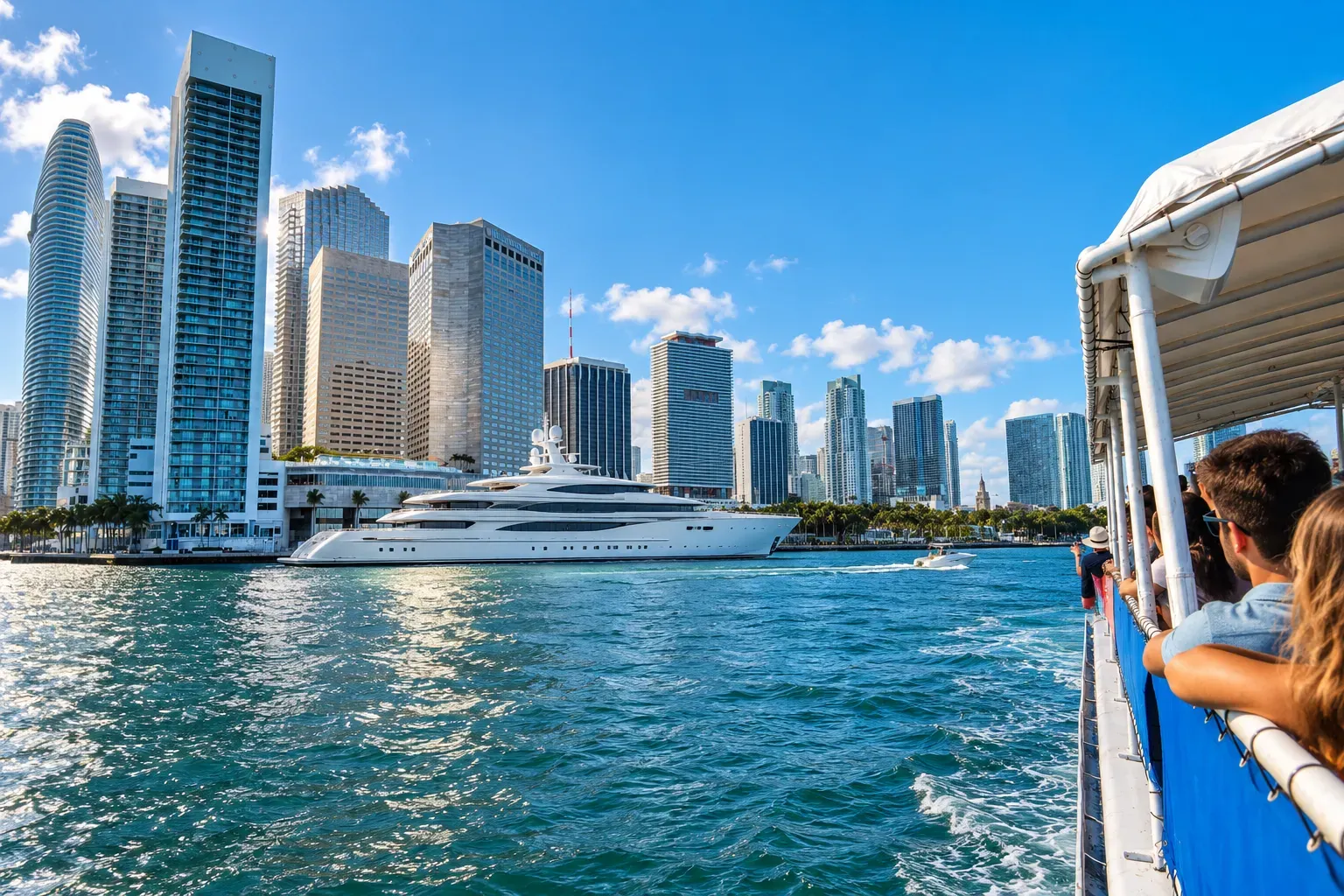
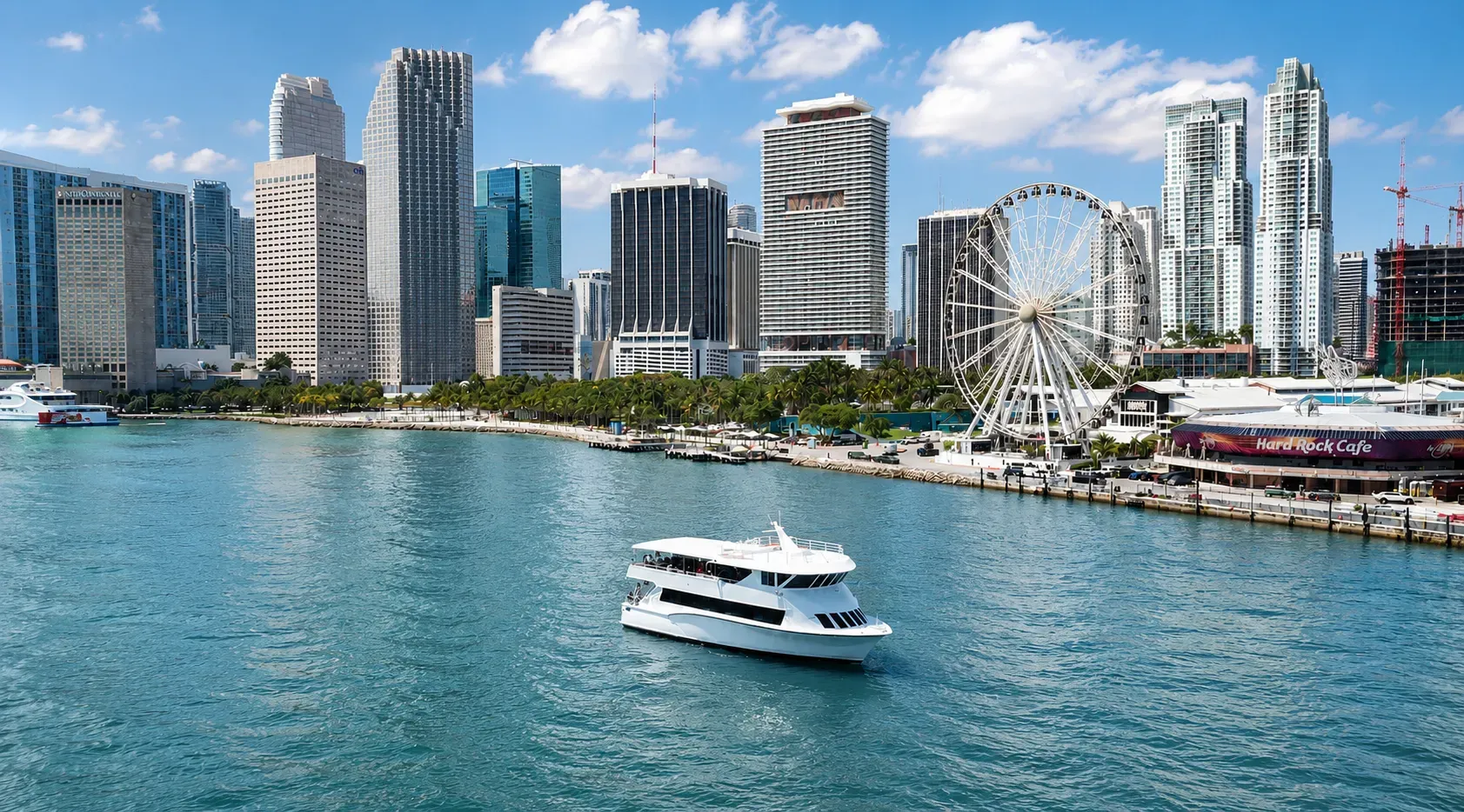
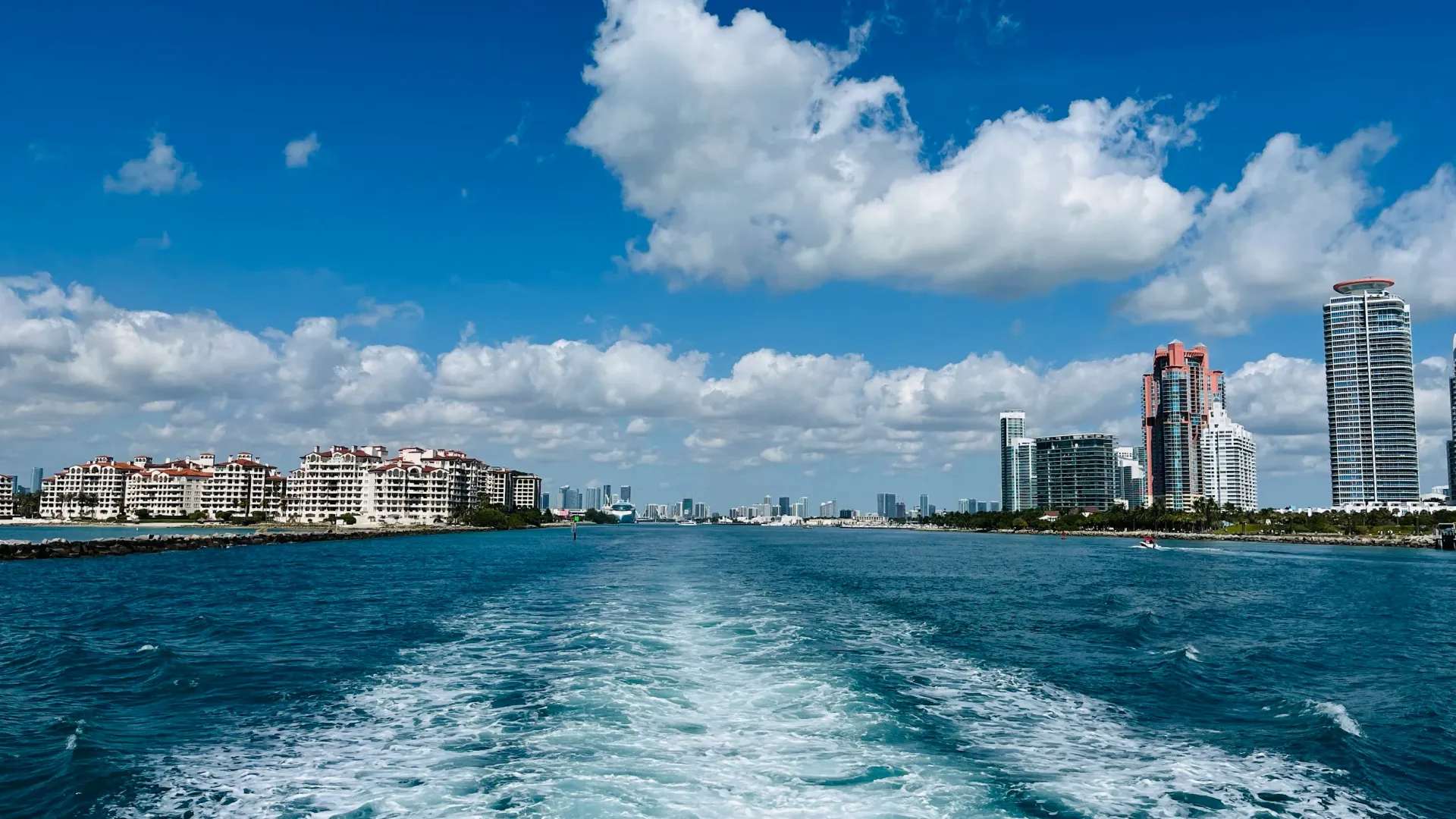
Miami sightseeing from the water gives guides a completely different environment to work in. Instead of standing on a city street, they're introducing guests to Miami while the scenery is constantly changing around them.
They need to know what guests are looking at and explain the history, islands, waterfront landmarks, architecture, celebrity stories, and local details at the right moment.
But they also need situational awareness. A guide can be entertaining a crowd one second and notice a wake approaching the next. That's when the microphone becomes a tool for safety, and the guide needs to calmly ask guests to sit down and follow instructions.
Guests who want to understand where these sightseeing experiences travel and what guides point out along the way can explore our Biscayne Bay Boat Tour Route.
Sunset Guides Set a Different Tone
As daylight begins to disappear, the atmosphere changes.
A good guide understands that.
They don't need to force the same energy onto every group. Sometimes it's about telling a great story or playing music. Other times, it's about recognizing the moment and letting guests enjoy what is happening around them.
That balance between entertainment and knowing when to let Miami do the talking is part of guiding the Miami Sunset Cruise.
After Dark, Miami Changes Again
Nighttime creates an entirely different environment.
The skyline lights up, the mood changes, and guides have a new backdrop for their stories. Their job is still to educate, entertain, and engage, but the energy doesn't have to be identical to a daytime experience.
The Miami Night Cruise shows guests another side of the city, where live guidance and Miami's lights become part of the same experience.
Visitors who want to learn more about what the city looks like after sunset can also explore Miami Skyline Cruises at Night.
Jet Ski Guides Have a Completely Different Job
Put the microphone down.
A Miami jet ski guide works in an environment where communication, awareness, preparation, and knowledge of the waterways become especially important.
Personality still matters, but this isn't the same job as entertaining a sightseeing group. The guide has to understand the activity they're leading while staying attentive to the people participating.
That's why Miami Jet Ski Tours require professionals trained specifically for that environment.
City Guides Bring the Streets to Life
Back on land, the knowledge changes again.
City guides need to understand Miami's neighborhoods, culture, landmarks, history, and the stories connecting them. They also have to manage a group while moving through different parts of the city.
That's part of what makes the Miami Five-in-One City Tour different from an experience on the water.
For visitors who want to discover more ways to experience the city and South Florida, our Miami Tours page connects the different adventures available from Miami.
Everglades Guides Need Specialized Knowledge
The Everglades isn't Downtown Miami.
Wildlife, nature, the ecosystem, and the environment require an entirely different knowledge base.
A guide has to understand where they are and communicate that information in a way visitors can enjoy, understand, and remember.
Guests interested in seeing this completely different side of South Florida can explore the Everglades Airboat Tour.
Key West Guides Have the Long Game
Traveling from Miami toward the Florida Keys presents another challenge.
The guide spends considerably more time with the guests and needs to understand the journey as well as the destination. Keeping people informed, comfortable, and engaged over a full-day experience requires a different approach.
The Key West Tour from Miami takes visitors beyond the city and into another part of South Florida, which means the person leading that experience needs to be prepared for a completely different day.
Same profession. Different environments. Different knowledge. Different responsibilities.
That's why one script or one personality could never define every guide working in Miami.
A Great Guide Knows the Miami Behind the View
Seeing Miami is one thing. Understanding what you're looking at is something completely different.
A skyline can be beautiful without an explanation. An island can look like another piece of land in Biscayne Bay. A waterfront building can seem like just another tower.
That's where Miami Tour Guides add something visitors can't always see for themselves: the story behind the view.
Miami History Is Part of the Job
Knowing a few celebrity names isn't enough.
A professional Miami Tour Guide should understand how the city developed, how its neighborhoods changed, and why certain landmarks matter. That knowledge gives guests context they wouldn't necessarily get by simply looking out the window.
For example, understanding How Biscayne Bay Shaped Miami gives a completely different meaning to the body of water visitors see throughout the city.
History turns sightseeing into understanding.
The Skyline Tells a Story Too
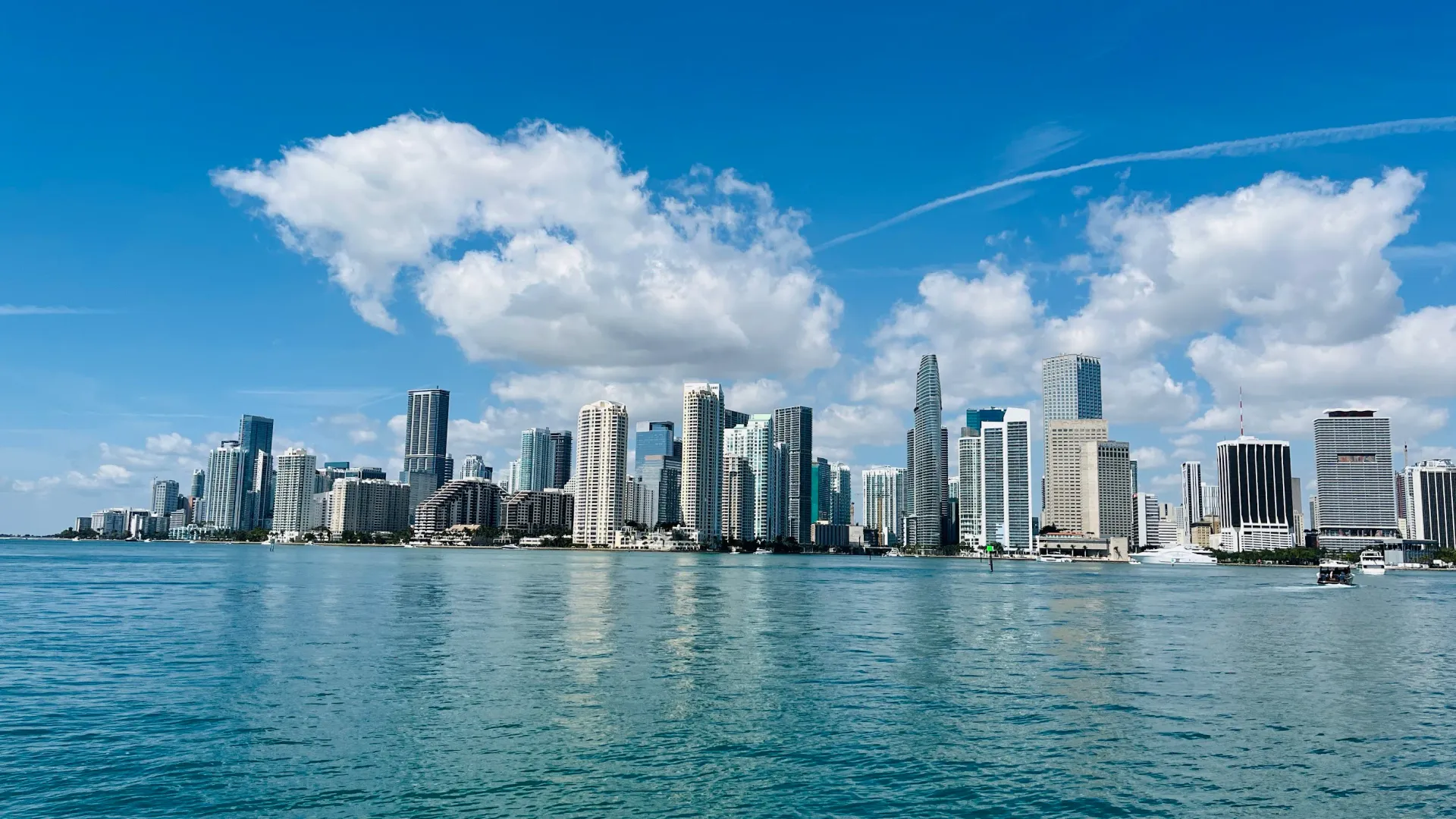
The Miami Skyline isn't simply a collection of buildings.
What guests see today reflects decades of growth, development, immigration, tourism, business, and Miami's relationship with the water.
A knowledgeable guide can take something guests were already going to photograph and give them a reason to remember the story behind the picture.
Downtown Miami Is More Than Skyscrapers
Downtown changes depending on where you see it from.
There are waterfront landmarks, bridges, neighborhoods, transportation, architecture, and decades of history packed into a relatively small area.
Our Downtown Miami Waterfront Complete Local Guide goes deeper into that part of the city, while a skilled guide takes those details and turns them into stories guests can understand while they're actually looking at Miami.
PortMiami Helped Change the City
Thousands of visitors see the port without necessarily understanding its importance to Miami.
Knowing How the Port of Miami Helped Build Modern Miami allows a guide to explain why the area matters beyond the cruise ships guests see today.
That's the difference between pointing at something and actually explaining why it matters.
Every Island Has Its Own Identity
From the water, Miami's islands can easily blend together for someone visiting for the first time.
They don't for experienced Miami Tour Guides.
Each island can have its own history, architecture, personalities, and stories. Guests interested in going deeper can explore The Most Famous Islands You Can See From Biscayne Bay.
The skill is making those places mean something before the scenery changes and the next part of Miami comes into view.
Celebrity Stories Need More Than a Famous Name
Celebrity homes are fun because people recognize the names.
But simply pointing at a mansion and saying who supposedly lives there isn't great guiding.
The entertainment comes from knowing the story, delivering it at the right moment, and keeping the audience interested without turning the experience into a list of famous people and expensive houses.
That's where Celebrity Mansion Boat Cruises in Miami connect sightseeing with one of the subjects visitors are naturally curious about.
Anybody can point at Miami. A great guide gives people a reason to understand what they're seeing.
Reading the Crowd Is a Skill of Its Own
Knowing Miami is only half the job. The other half is understanding the people standing in front of you.
Every group has its own personality. Some guests arrive ready to laugh. Others want history. Families may have children asking questions, couples may want to relax, and international visitors can bring completely different cultures and perspectives into the same experience.
Great Miami Tour Guides recognize that quickly.
No Two Audiences Are the Same
A guide may follow a familiar itinerary hundreds of times, but they'll never lead the exact same group twice.
Guests come to Miami from around the world. Different accents, languages, ages, personalities, and expectations are all part of the job.
Instead of treating those differences like a challenge, an experienced guide can turn them into part of the fun.
Ask people where they're from. Learn something about the group. Get them involved.
That's when strangers start becoming an audience.
One Person Shouldn't Control the Experience
Every guide eventually encounters a difficult situation.
Maybe one guest isn't happy. Maybe a family isn't cooperating. Maybe somebody simply has a different attitude from everyone else.
A professional Miami Tour Guide can't allow that negativity to become the focus of the entire group.
Sometimes the answer is talking to that guest a little more and bringing them into the experience. Other times, the smartest move is giving them a little less attention.
There isn't a script for that.
It takes common sense.
Respect Comes Before Crowd Control
Being in charge doesn't mean being rude.
The best tour guides in Miami know how to remain polite while still being assertive. If instructions need to be followed, the guide should communicate them clearly without embarrassing a guest or unnecessarily changing the mood for everyone else.
That's especially important when safety is involved.
People are there to have a good time. A professional knows how to maintain that atmosphere while still taking responsibility for the group.
Different Cultures Deserve the Same Respect
Miami is a melting pot, and so are its visitors.
A guide may spend the day communicating with people who speak differently, have unfamiliar accents, come from another country, or need additional assistance.
Nobody should be made to feel uncomfortable because of that.
The job requires patience, respect, and the willingness to help—including guests with disabilities who may need additional consideration during an experience.
Sometimes More Is Less
One of the hardest things to teach a new guide is when not to keep pushing.
Not every quiet guest needs to be pulled into a conversation. Not every complaint needs to become a ten-minute discussion. Not every silence needs to be filled with another joke.
Great guides learn to judge those moments.
Sometimes more engagement changes someone's attitude.
And sometimes a little less is exactly what the experience needs.
That's what reading a crowd really means: knowing that you're responsible for a group of people you've probably never met before and finding a way to make the experience work for all of them.
English and Spanish: Communication Is Part of the Experience
Miami welcomes visitors from around the world, making bilingual communication an important part of the sightseeing experience.
For our guides, English and Spanish are the most common languages and the basic language requirement. Someone can know the history, have an incredible personality, and understand every part of an excursion, but that knowledge has little value if guests can't understand what is being said.
Speaking the Language Is About More Than Translation
Live narration isn't simply translating the same sentence from English into Spanish.
Tone matters. Timing matters. Humor matters.
A bilingual local guide needs to communicate the meaning behind a story while keeping the experience moving and making both audiences feel included.
That's very different from pressing a button and hearing the same information repeated in another language.
International Visitors Make Miami More Interesting
One of the best parts of guided sightseeing in Miami is never knowing exactly who will be in the audience.
Guests may arrive from Latin America, Europe, Canada, the Caribbean, another part of the United States, or somewhere completely unexpected.
That's when it becomes fun.
A skilled local storyteller can ask where people are from, engage with different nationalities, and allow those conversations to become part of the experience.
An Accent Should Never Become a Barrier
People communicate differently.
Different accents, expressions, cultures, and levels of English or Spanish are normal when working with international visitors.
A professional local guide needs the patience to listen, understand what someone is trying to communicate, and help without making that person feel uncomfortable.
Respect doesn't require a script.
Clear Communication Also Matters for Safety
Language becomes even more important when safety instructions need everyone's attention.
If directions have to be given quickly, guests need to understand them. That's why communication skills, situational awareness, and safety work together.
Entertainment may get the crowd listening.
Clear communication makes sure they understand when listening really matters.
Miami's Diversity Becomes Part of the Story
The people visiting Miami aren't the only ones with different backgrounds. The local guides themselves can come from different countries, cultures, and heritages.
That diversity fits the city.
There isn't one accent, personality, or background that defines someone capable of delivering an excellent guided experience. What matters is whether that person can communicate, show respect, understand their responsibilities, and take pride in what they do.
In a multicultural city, great storytelling isn't only about knowing what to say. It's knowing how to connect with the people listening.
Professional Standards Start Before the Tour Begins
Guests begin forming an opinion before the first story is told.
Being knowledgeable and entertaining matters, but so does professionalism. Showing up on time, looking presentable, maintaining good hygiene, and being prepared are basic standards that shouldn't disappear simply because someone's job involves entertaining visitors.
Punctuality Sets the First Impression
A guided excursion runs on a schedule.
Guests have made plans, arrived at a meeting point, and trusted a company with part of their vacation. Being ready on time shows respect for both the customer and the rest of the team.
Great service shouldn't begin five minutes after departure.
It starts before the guests arrive.
Presentation Matters
There is a misconception that because guiding can be casual and entertaining, appearance doesn't matter.
It does.
A clean uniform, good hygiene, and a professional appearance tell guests that the person standing in front of them takes the job seriously.
You don't need to look like you're walking into a corporate office.
But if you look good, smell good, and deliver a great experience, what else can a guest ask for?
Professionalism Shows When Something Goes Wrong
The real test isn't always what happens when everything goes perfectly.
It's how someone responds when it doesn't.
A late guest, misunderstanding, complaint, personality conflict, weather change, or unexpected situation can change the mood quickly. A hospitality professional needs to stay composed instead of allowing frustration to become part of everyone else's experience.
The guests shouldn't have to manage the problem.
That's the professional's job.
Every Guest Deserves Respect
Great customer service doesn't depend on where somebody comes from, what language they speak, their age, their accent, or whether they need additional assistance.
Miami welcomes people from around the world.
That means patience and respect aren't optional. Guests with disabilities may need additional help. International travelers may need something explained differently. Someone visiting for the first time may ask a question that seems obvious to a local.
The professional response is simple:
Help them.
Licensing and Professional Requirements Depend on the Experience
Not every sightseeing job in South Florida comes with the same requirements.
On a vessel, the person providing live sightseeing narration has a different role from the captain and crew responsible for operating the boat. That's an important distinction when discussing licensing, safety, and maritime responsibilities.
Ground transportation works differently.
For qualifying Miami-Dade passenger transportation operations, a Passenger Motor Carrier (PMC) Certificate of Transportation applies to the carrier. Miami-Dade says passenger motor carrier service generally covers prearranged transportation in vans and minibuses seating 9 to 28 passengers, excluding the driver. Drivers of those vehicles must hold a valid for-hire chauffeur registration, and the vehicles must be inspected.
Long-distance passenger transportation can introduce federal requirements as well. When a vehicle meets federal CDL criteria—for example, a vehicle designed to transport 16 or more people including the driver—the driver must have the appropriate Commercial Driver's License and endorsement. Federal rules also impose drug-and-alcohol testing requirements on CDL drivers through their employer's program.
The important point for guests is that the storyteller, driver, captain, crew, carrier, and vehicle can each have different responsibilities and requirements.
Same tourism industry.
Different jobs.
Different qualifications.
Reviews Tell the Story
A company can train someone, watch their performance, and establish standards.
Eventually, though, guest reviews tell the story.
That's how we check the temperature.
Did people have a great time? Did they feel taken care of? Did the storytelling add something to the experience? Did the person leading the group make an impression? Would the guest recommend it to somebody else?
A five-star review isn't something anyone should expect simply for showing up.
It has to be earned.
Service, Value and Experience
Our standard comes down to three things:
- Service: Treat people with respect, communicate clearly, and take care of the guests.
- Value: Give visitors something meaningful for the time and money they've chosen to spend in Miami.
- Experience: Create something they'll remember after their vacation is over.
Personality can get people's attention. Knowledge can teach them something. Entertainment can make them laugh.
But when service, value and experience come together, that's when someone has done the job the way we believe it should be done.
The Microphone Changes Everything
Knowing the city is one skill.
Standing in front of complete strangers and making them care about what you're saying is another.
The moment a local tour guide takes the microphone, knowledge becomes a performance. Families, couples, international travelers, children, first-time visitors, and even locals can all be part of the same audience.
That's what makes guided experiences in Miami unpredictable.
You have to earn people's attention.
Every Guided Experience Is a Live Performance
There are no retakes.
If a joke doesn't land, keep moving. If somebody asks an unexpected question, think fast. If the crowd suddenly gets excited about something they're seeing, recognize it and work with the moment.
A great sightseeing guide doesn't simply deliver information. They turn local history, landmarks, personalities, and whatever is happening around the group into live commentary people actually want to hear.
In some ways, you're auditioning for a movie in Hollywood every time you step in front of a new group.
Except your audience is already sitting there.
Fast Thinkers Make Better Storytellers
A memorized speech prepares someone for what they expect to happen.
Live tour narration requires being ready for what nobody expected.
A guest might interrupt with a question. Someone may notice something happening nearby. A child might say something hilarious. An entire group can suddenly become interested in a story that normally takes thirty seconds to explain.
An experienced local expert knows when to follow that energy and when to bring everyone's attention back.
That's something you learn by dealing with real people.
Music Can Change the Energy
Not every memorable moment needs another historical fact.
Sometimes music fits the atmosphere better.
A professional working in Miami sightseeing needs to understand when some energy will improve the moment and when the surroundings should speak for themselves.
The goal isn't constant noise.
It's timing.
Humor Should Feel Natural
You can usually tell when somebody is trying too hard to be funny.
A great professional tour guide doesn't need to force every joke. Humor can come from the audience, something happening around the group, a guest's response, or simply the personality of the person holding the microphone.
That's one reason live guided tours can feel different from one group to the next.
The funniest moment of the day might be something nobody could have planned.
Great Tour Narration Also Requires Silence
Being good with a microphone doesn't mean using it every second.
Guests came for a Miami sightseeing experience, not a lecture.
Sometimes the best thing a live guide can do is explain what matters, provide the local context, and then give people time to enjoy what they're seeing.
A beautiful skyline doesn't always need another paragraph.
A sunset doesn't always need another joke.
Great performers know how to command attention. Great local guides also know when to give it back.
The Best Guides Don't Follow a Script
A route can be planned. History can be studied. Safety procedures can be trained.
But the actual conversation should have room to breathe.
That's one of the biggest differences between simply delivering tour narration and creating a memorable guided sightseeing experience. The information needs to be accurate, but the way it is delivered can change depending on the people listening.
The Audience Changes Every Time
One group might love Miami history.
Another wants to hear about celebrities. A family may have children asking questions, while international visitors may be curious about something completely different.
A skilled local guide recognizes those signals instead of forcing every audience through exactly the same presentation.
The destination hasn't changed.
The people have.
Questions Can Take the Experience Somewhere New
Some of the best conversations begin with something a guest asks.
That's why interactive sightseeing has value. Instead of waiting for the next prerecorded segment, someone can raise a hand, ask about what they're seeing, and get an answer while they're actually looking at it.
A knowledgeable tour leader should be prepared for those moments.
Sometimes one good question creates a conversation the guide never planned to have.
Local Knowledge Needs Personality
Facts alone don't automatically create a good story.
Knowing a date, building, neighborhood, island, or historical event is the beginning. A local storyteller still has to explain why somebody visiting Miami should care about it.
That's where personality and knowledge meet.
For visitors who want to understand the broader experiences available around the city, Popular Miami Sightseeing Tours from Bayside: Local Guide provides another look at how different sightseeing options connect visitors with Miami.
Great Guides Know When to Improvise
Improvising doesn't mean making things up.
Historical accuracy still matters.
It means changing the delivery without changing the facts. A story can become shorter, funnier, more detailed, or more conversational depending on the audience and what's happening around them.
That's an important skill in live guided experiences, because the person leading the group has to think while they're speaking.
Never Sacrifice Accuracy for Entertainment
This is where professionalism matters.
If a guide doesn't know the answer to something, inventing one just to keep talking isn't good storytelling.
The goal isn't to sound like you know everything.
It's to understand the experience, know the history, communicate confidently, and recognize the difference between entertainment and misinformation.
A great story can make people laugh.
A true local expert makes sure they learn something along the way.
How to Recognize a Great Local Guide
You don't need to work in tourism to recognize when someone takes the job seriously.
A great guided experience usually gives you clues early. Pay attention to how the person communicates, handles the group, answers questions, and responds when something doesn't go according to plan.
They Know More Than the Basic Facts
A local expert should be able to explain more than names and locations.
Listen for context.
Why does that neighborhood matter? What's the history behind that landmark? How did Biscayne Bay influence the city? Why did Downtown develop the way it did?
Good local storytelling connects what you're seeing with why it matters.
They Talk With You, Not At You
There's a difference.
Strong guest interaction feels natural. The person leading the experience asks where people are from, listens to questions, notices reactions, and allows the audience to become part of the conversation.
You shouldn't feel like you're listening to somebody recite a school presentation.
They Can Answer Questions Without Losing the Group
Questions are part of interactive sightseeing, but answering one person shouldn't mean forgetting everybody else.
A skilled tour leader can answer a guest, provide useful context, and smoothly bring the conversation back to the entire audience.
That's crowd management without making it feel like crowd management.
They Know When Safety Takes Priority
This one matters.
A professional can be funny and energetic one minute and completely serious the next when circumstances require it.
There should never be confusion about which one comes first.
Safety wins every time.
They Take Pride in the Job
You can usually see it.
They're punctual. They're prepared. Their appearance is professional. They understand the experience they're leading, and they don't act like entertaining visitors is something they simply have to get through before going home.
That pride shows up in the smallest details.
The Reviews Usually Reveal the Rest
When you're researching guided tours in Miami, don't look only at the overall star rating.
Read what people actually wrote.
Do guests repeatedly mention the person who led the experience? Do they talk about the stories, humor, knowledge, patience, professionalism, or how they were treated?
Those details can tell you considerably more than a number by itself.
And for travelers still deciding whether a guided experience on the water belongs in their Miami plans, Is a Miami Boat Cruise Worth It? Everything You Need to Know Before You Book goes deeper into what to consider before choosing an experience.
The attraction may get someone to make the reservation. The person leading it can determine what they remember afterward.
Frequently Asked Questions About Local Guides in Miami
Do Local Guides in Miami Need Professional Training?
Training depends on the experience and the responsibilities involved. In our operation, guides typically receive about two weeks of hands-on training and shadow an experienced professional before leading guests independently.
Knowing the route isn't enough. Safety, communication, local knowledge, guest interaction, and situational awareness are all part of being prepared.
Are Miami Sightseeing Experiences Available in English and Spanish?
Yes. English and Spanish are the most common languages used across our guided experiences.
Bilingual communication is especially valuable in Miami because visitors arrive from around the world. Being able to understand the stories, instructions, and historical information is an important part of enjoying the experience.
Is Live Narration Better Than Prerecorded Narration?
They provide different experiences, but we believe live narration offers something a recording cannot fully reproduce: real-time human interaction.
A live guide can answer questions, react to the audience, adjust the storytelling, recognize something unexpected, and change the energy based on the people in front of them.
A recording delivers information. A person can create a conversation.
What Should I Look for in a Good Sightseeing Guide?
Look beyond personality.
A strong local sightseeing guide should demonstrate knowledge, confidence, professionalism, clear communication, awareness, respect, and the ability to manage a group without taking the fun out of the experience.
And when safety requires everyone's attention, they should know exactly when it's time to get serious.
Do All Guided Experiences Require the Same Skills?
No.
Guided tours in Miami can take place in completely different environments. Someone working on Biscayne Bay has different responsibilities from a city professional, jet ski leader, Everglades specialist, or someone traveling with guests toward Key West.
The title may sound similar, but the knowledge, training, environment, and responsibilities can change considerably.
Can a Great Guide Really Make That Much Difference?
We believe so.
Visitors can see a skyline, mansion, island, neighborhood, or landmark on their own. A knowledgeable local storyteller can explain the history behind it, answer questions, add personality, and help guests understand why what they're seeing matters.
The attraction gives you something to see.
The person guiding you can give you the story behind it.
Have more questions before visiting? For information about check-in, reservations, what to bring, policies, sightseeing, and other common questions, visit our Miami Boat Tours FAQ page.
The People Behind the Experience
Miami gives visitors plenty to see, but sometimes it's the person showing it to you who determines how you'll remember it.
Great Miami Tour Guides bring together local knowledge, personality, communication, professionalism, awareness, and entertainment. They know when to tell the story, when to make people laugh, when to answer the unexpected question, and when to simply let Miami have the spotlight.
That's the human side of sightseeing.
Whether you're exploring the city, spending time on Biscayne Bay, heading into the Everglades, traveling toward Key West, or choosing one of our Miami sightseeing experiences, every excursion is different. But the standard behind it should remain the same.
Service. Value. Experience.
A great Miami Tour Guide understands that every new group is a fresh opportunity. New faces. New personalities. New cultures. New questions. And moments that could never have been written into a script.
That's why the people leading these experiences matter.
You can train someone on a route. You can teach history. You can establish procedures and professional standards.
But you can't manufacture the human touch.
As a company, we create the tours. But our Miami Tour Guides are the ones who bring those tours to life.