Miami Boat Tourism: How Boating Shapes Miami’s Tourism Industry
Miami Boat Tourism: How Boating Shapes Miami’s Tourism Industry
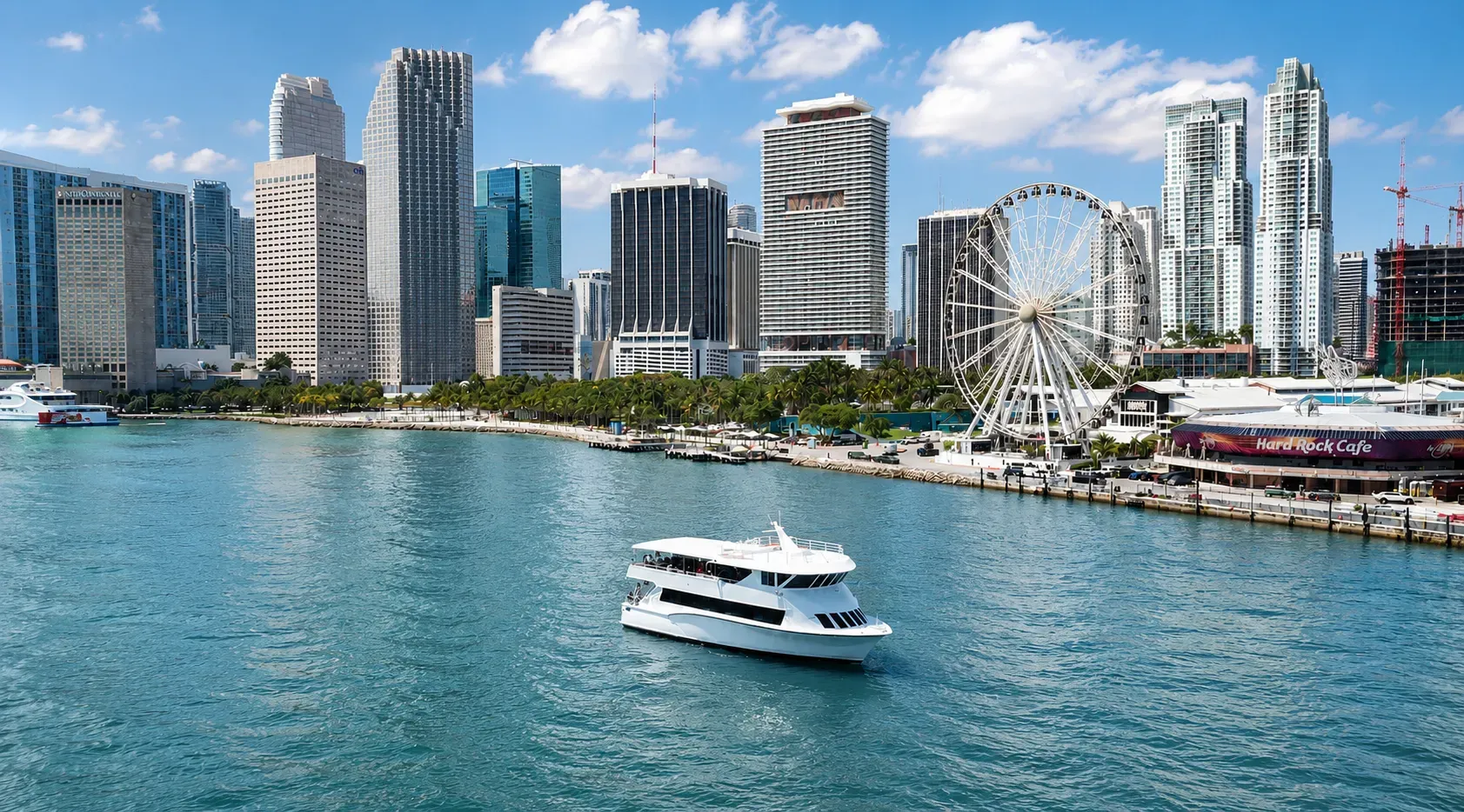
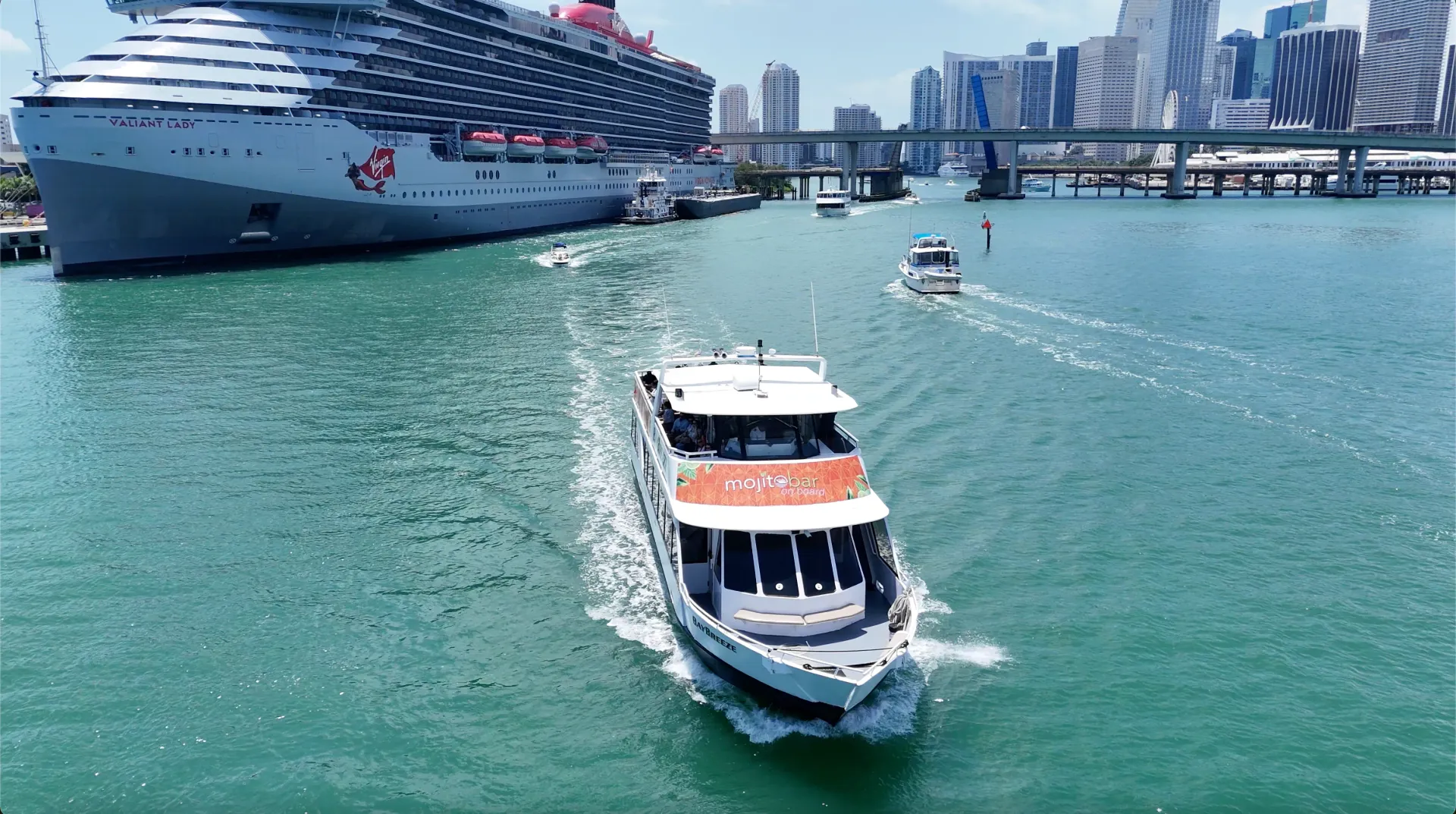
Miami boat tourism is the network of sightseeing cruises, recreational boat rentals, yacht charters, Jet Ski experiences, marinas, captains, crews, and waterfront businesses that connect visitors with Miami from the water. Boating shapes Miami’s tourism industry by supporting local jobs and businesses while turning Biscayne Bay and the city’s waterfront into an essential part of the visitor experience.
From our waterfront location at Bayside Marketplace, Official Miami Boat Tours has experienced this industry firsthand since 2008.
And the boat is only the part visitors see.
Behind every departure is a much larger operation that can include:
- Licensed captains and first mates
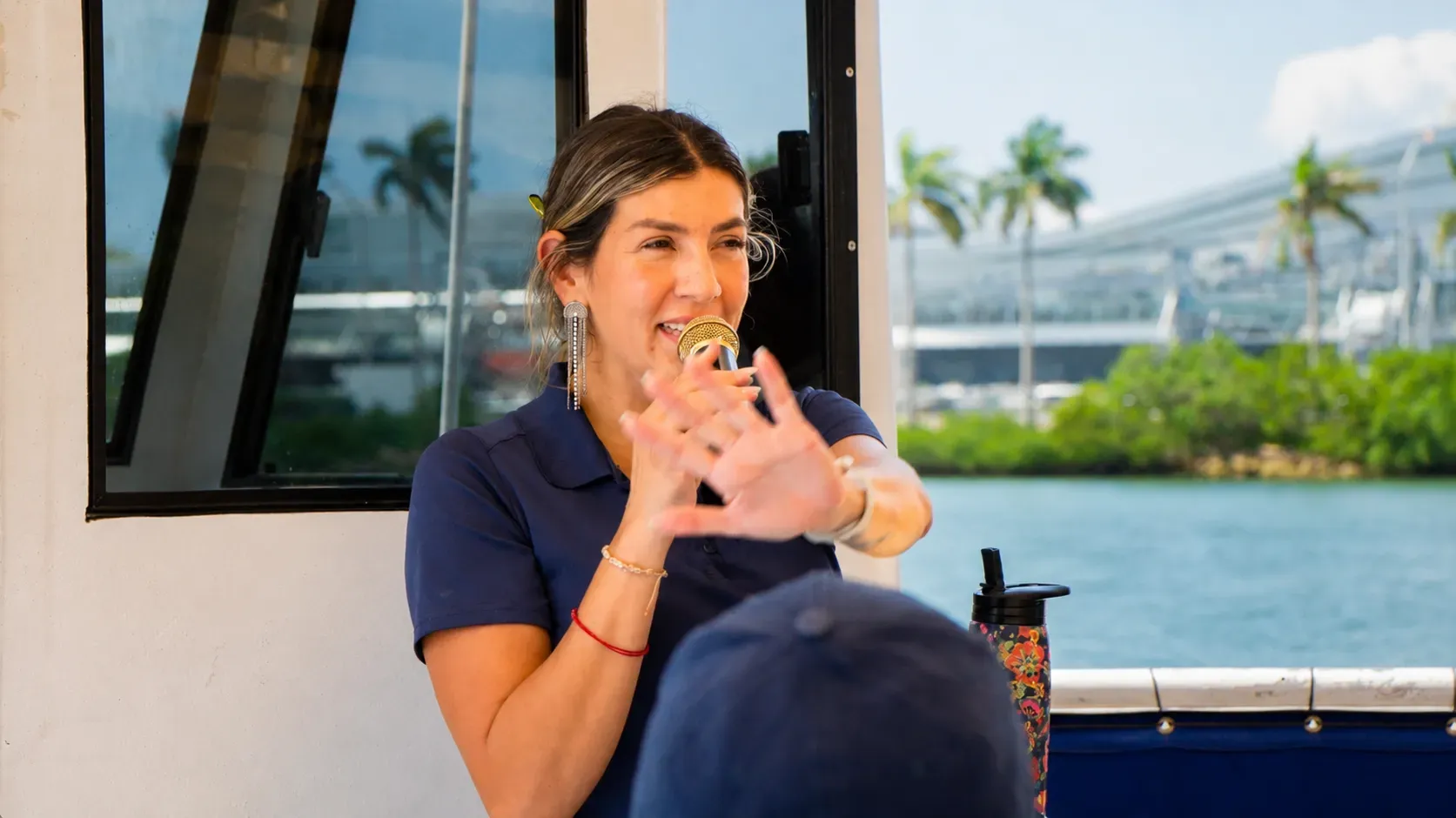
- Tour guides and onboard crews
- Dock and marina teams
- Boat mechanics and maintenance crews
- Cleaning and fueling teams
- Reservation and check-in staff
- Managers and supervisors
- Local businesses serving Miami visitors
At the center of much of this activity is Biscayne Bay, the body of water connecting Downtown Miami with Miami Beach, PortMiami, the surrounding islands, marinas, and some of the city's most recognizable waterfront views.
One important departure point is Bayside Marketplace at 401 Biscayne Blvd, Miami, FL 33132. Its waterfront and marina bring together sightseeing cruises, recreational boating, yacht charters, Jet Ski experiences, restaurants, shops, and visitors from around the world in one Downtown Miami location.
But Miami's boating industry has changed dramatically.
Since 2008, we have watched the business shift from an industry where many visitors arrived at the waterfront and purchased tickets in person to one where travelers can discover, compare, and reserve Miami water activities directly from a mobile phone.
What hasn't changed is what happens after the reservation.
Real captains still command the vessels. Real crews prepare them. Real mechanics maintain them. And real people are responsible for getting passengers safely back to the dock.
That human infrastructure is what makes Miami boat tourism possible.
And to understand how important boating has become to Miami tourism, you have to look beyond the boats themselves—to the jobs they create, the businesses they support, the waterways they depend on, and the people working behind the scenes every day.
How Miami Boat Tourism Supports Local Jobs and Businesses
Miami boat tourism supports far more jobs than the captain and crew passengers see during a trip. Every sightseeing vessel leaving the dock depends on local workers who prepare, maintain, operate, sell, and support the experience.
At a busy Miami waterfront operation, one vessel can require a captain, first mate, additional crew, tour guide, dock staff, check-in personnel, cleaners, mechanics, managers, and supervisors.
Multiply that across several vessels operating throughout the day.
That creates an economic chain extending from the vessels and marinas into Miami’s broader tourism economy.
The Jobs Behind a Day on the Water
Long before passengers arrive, the work has already started.
Cleaning crews prepare the vessels. Mechanics inspect equipment and handle maintenance. Captains and crews prepare for departure while reservation and waterfront teams begin checking in passengers.
Depending on the operation, Miami boating tourism can directly support jobs such as:
- Licensed boat captains
- First and second mates
- Live Miami tour guides
- Dock and marina personnel
- Vessel cleaning crews
- Marine mechanics
- Maintenance technicians
- Check-in and reservation agents
- Waterfront kiosk employees
- Managers and supervisors
The economic chain doesn't stop at the marina.
Visitors may also spend money at nearby restaurants, shops, parking facilities, transportation services, and other local businesses before or after experiencing Miami from the water.
One Boat Can Support an Entire Team
From our own experience, operating multiple sightseeing vessels on the same day can mean more than 10 people working across the boats, docks, check-in locations, management, and daily operations—before counting outside mechanics and other supporting services.
That's an important part of understanding Miami's boating industry.
A visitor may purchase one ticket for one 90-minute sightseeing experience, but that single transaction helps support a much larger local tourism ecosystem.
The boat is what the visitor sees. The people behind it are what make Miami boat tourism work.
Why Biscayne Bay Is the Heart of Miami Boat Tourism
Miami can sustain such a large boating industry because water isn't simply on the edge of the city. It is part of Miami's geography, recreation, lifestyle, and tourism.
At the center of it is Biscayne Bay.
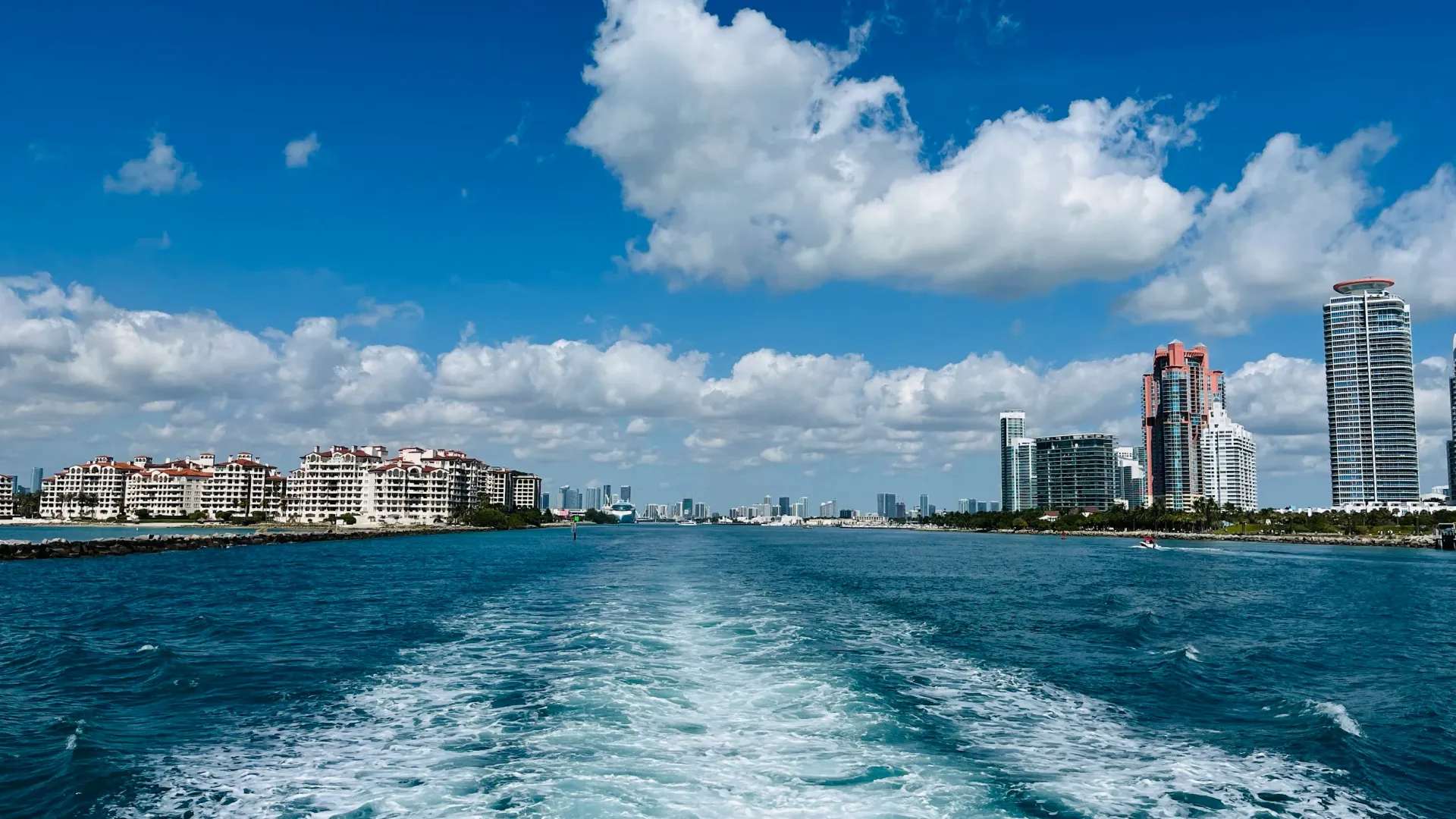
The bay connects Downtown Miami, Miami Beach, PortMiami, waterfront communities, islands, marinas, and the entrance to the Miami River, creating an enormous environment for both recreational boating and tourism.
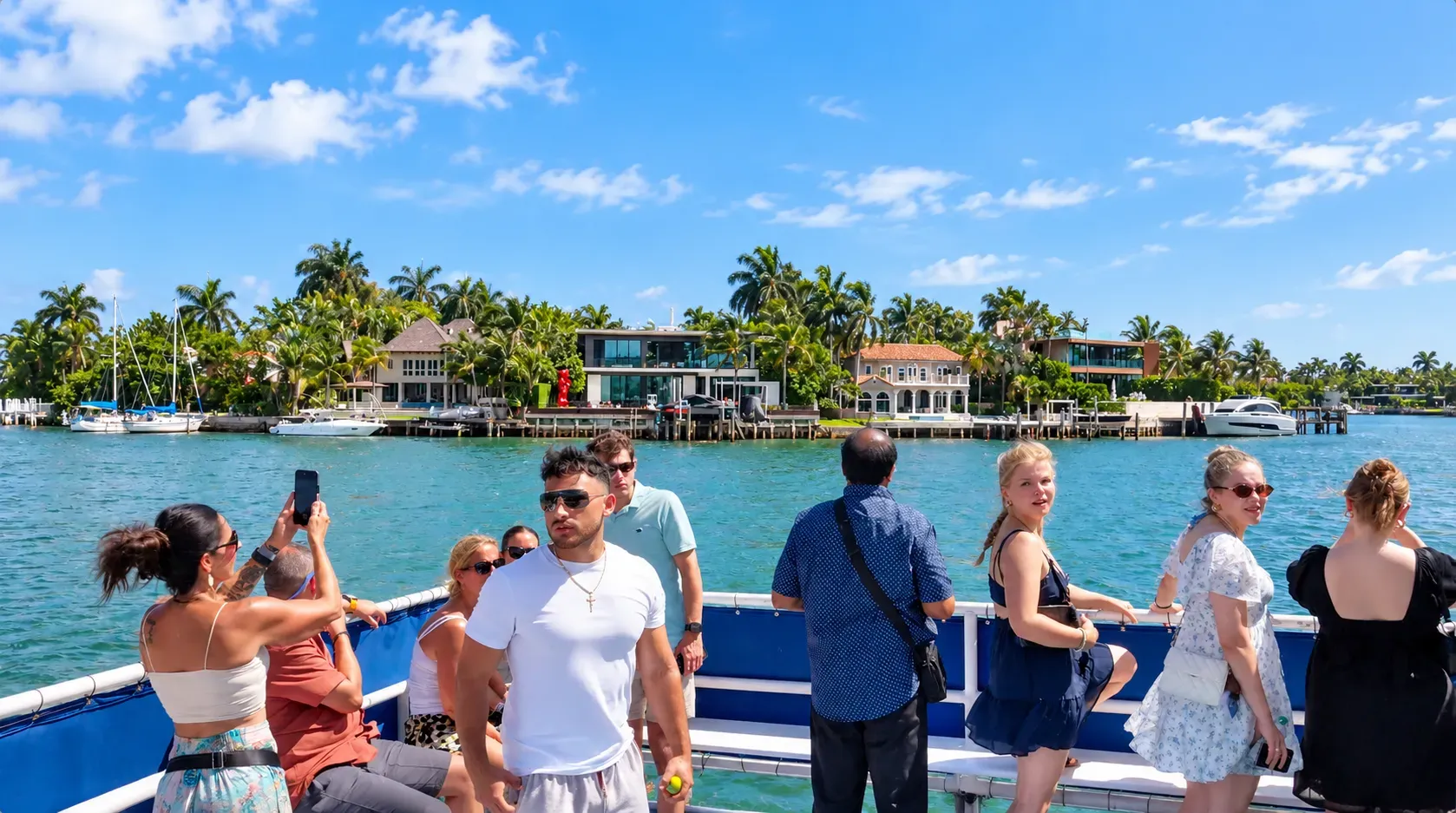
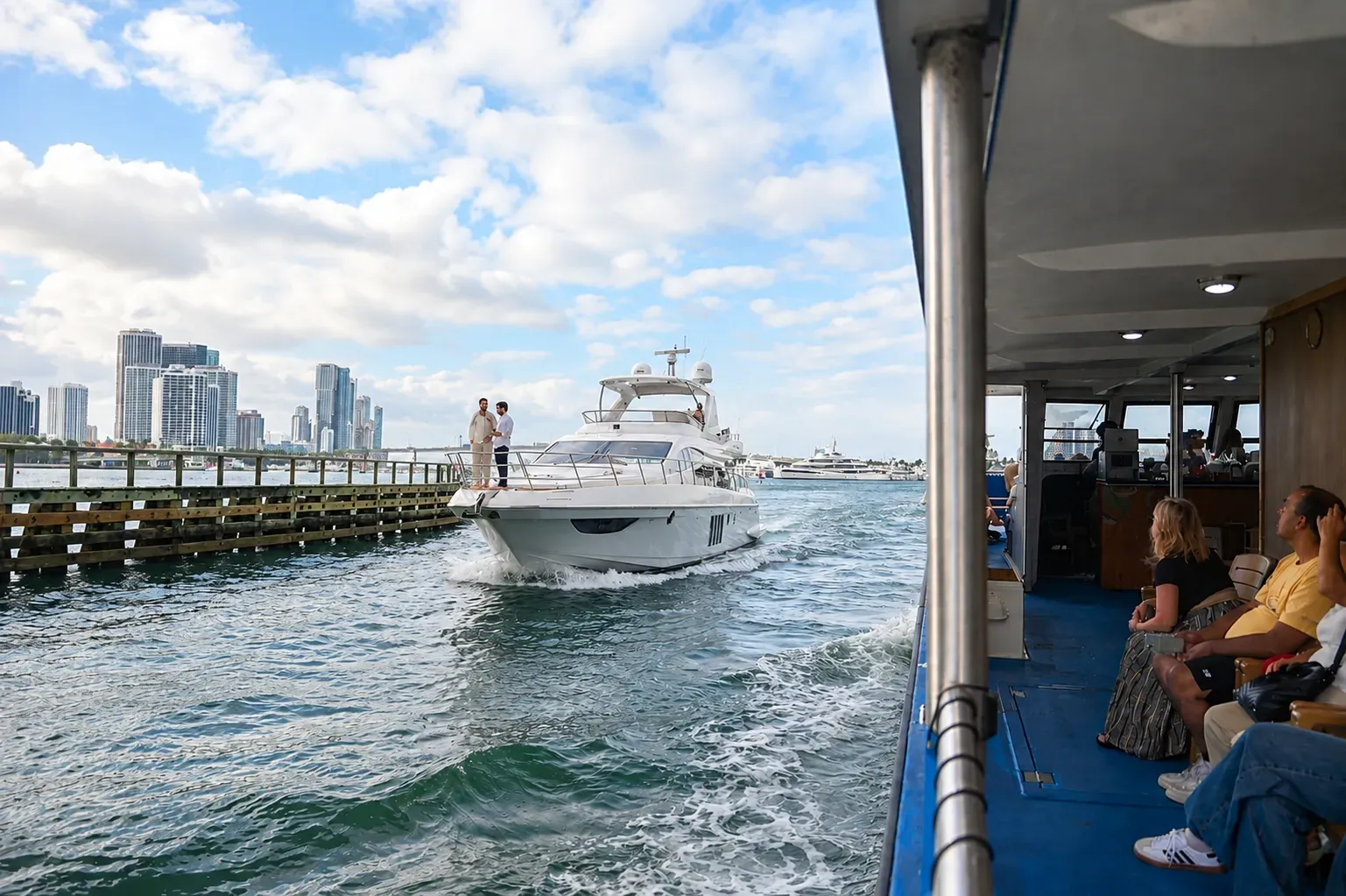
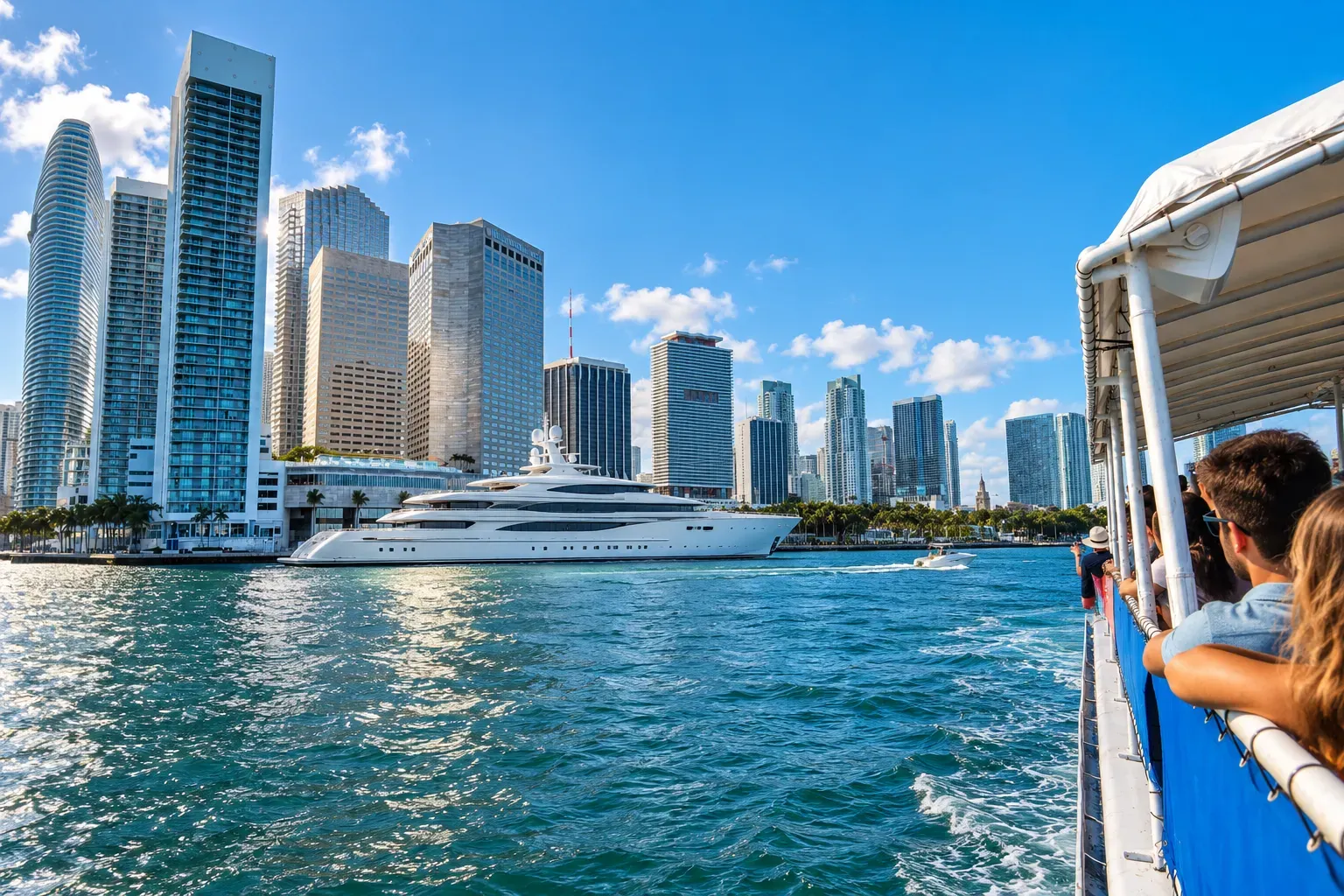
That geography gives Miami something special: a major urban waterfront where visitors can experience the city from the water while surrounded by islands, architecture, working marinas, cruise ships, and the Miami skyline.
One Bay, Many Ways to Experience Miami
Miami boating tourism isn't built around one type of vessel or one type of traveler.
Biscayne Bay supports completely different experiences depending on what someone wants from their time on the water:
- Miami sightseeing cruises
- Recreational boat rentals
- Private yacht charters
- Guided Jet Ski experiences
- Sunset cruises
- Night cruises
- Celebrity-home sightseeing
- Recreational boating with family and friends
A family looking for a sightseeing experience may choose a completely different vessel than a small group wanting a private boat or someone looking for the adrenaline of a Jet Ski.
Yet many of those experiences share the same thing:
Biscayne Bay.
That variety is one reason Miami boat tourism has developed into something much larger than sightseeing alone.
The Islands Make Biscayne Bay Different
Biscayne Bay isn't simply open water with Miami in the distance.
Its islands, channels, bridges, waterfront neighborhoods, and landmarks create constantly changing views as you move across the bay.
Depending on the route and type of boating experience, visitors may encounter areas around:
- Star Island
- Palm Island
- Hibiscus Island
- The Venetian Islands
- Fisher Island
- Monument Island
- Miami Beach
- PortMiami
- The entrance to the Miami River
- Downtown Miami
- Brickell
These places help explain why boating has become so closely connected with the way visitors experience Miami.
From land, many appear to be separate neighborhoods, islands, and landmarks.
From Biscayne Bay, they become part of one connected waterfront city.
That connection between Miami and the water is one of the fundamental reasons Miami can support such a diverse boating industry—and why Miami boat tourism has become an important part of the city's overall tourism experience.
Why Bayside Marketplace Became a Hub for Miami Boating Tourism
Bayside Marketplace has become one of Downtown Miami’s most important waterfront tourism hubs because it brings the city, the marina, and Biscayne Bay together in one location.
At 401 Biscayne Blvd, Miami, FL 33132, visitors can arrive in Downtown Miami and find multiple ways to experience the city both on land and on the water.
For Miami boating tourism, that waterfront access matters.
Bayside and the adjacent marina create a departure environment for different types of experiences, including:
- Sightseeing cruises
- Recreational boat rentals
- Yacht charters
- Jet Ski experiences
- Private boating experiences
This concentration of activities has helped make the Bayside waterfront a recognizable starting point for visitors looking to experience Miami beyond its beaches.
Bayside Connects Downtown Miami With Biscayne Bay
What makes Bayside different isn't simply the number of visitors who pass through it.
It's the location.
Visitors are positioned between Downtown Miami and Biscayne Bay, with PortMiami, the Miami skyline, waterfront attractions, restaurants, shops, and marina activity surrounding them.
That means someone can arrive at one destination, spend time along the waterfront, and then continue directly onto the water.
For families and first-time visitors especially, that creates a convenient connection between Miami tourism on land and Miami tourism on the water.
More Than Sightseeing Cruises Depart From the Waterfront
One reason Bayside matters to Miami boat tourism is the variety of boating experiences associated with the area.
A visitor isn't limited to one way of seeing Miami.
Someone looking for an affordable shared experience might choose a sightseeing cruise. A family or small group may prefer a recreational boat rental. Another group may want the privacy and space of a yacht charter.
That variety has helped the waterfront serve different budgets, group sizes, and reasons for getting on the water.
It also reinforces something important about Miami's boating industry:
The experience someone chooses may change, but Biscayne Bay remains the common connection.
Why 401 Biscayne Blvd Matters to Miami Tourism
For us, 401 Biscayne Blvd isn't an address added to a website for local relevance.
It's where we work.
It's where visitors check in, where vessels depart nearby, where tourism employees report to work, and where people from around the world begin different Miami experiences every day.
That firsthand connection is important when discussing Miami boat tourism because there is a difference between writing about a tourism district and actually operating within it.
Bayside brings together the waterfront, Downtown Miami, visitors, businesses, transportation, and access to Biscayne Bay in one place.
That combination is what has made Bayside Marketplace an important part of Miami's boating tourism ecosystem.
How Miami Boat Tourism Has Changed in the Last 20 Years
Miami boat tourism has transformed dramatically over the last two decades, but the biggest change isn't what happens on the water. It's how people find their way to it.
From our experience in the industry since 2008, we've watched the business move from predominantly face-to-face sales into a digital marketplace capable of reaching travelers almost anywhere in the world.
Years ago, many visitors arrived in Miami without a reservation. They walked the waterfront, spoke with someone at a kiosk, asked questions, purchased a ticket, and then headed toward the dock.
Today, the journey often starts thousands of miles away.
From On-Site First to Online First
The smartphone completely changed Miami boating tourism.
Today, travelers can discover, compare, and book almost any excursion on the water directly from their mobile phone.
They don't have to be standing at a marina.
They don't even have to be in Miami yet.
That represents one of the biggest shifts we've personally witnessed:
The industry went from on-site first and online second to online first and on-site second.
For waterfront tourism businesses, that changed everything from marketing and reservations to customer service and the way visitors plan their time in Miami.
Technology Made Miami's Waterfront Globally Accessible
Search engines were only the beginning.
Mobile booking technology, digital maps, online reviews, travel platforms, social media, and artificial intelligence have continued changing how travelers discover Miami.
A visitor can now research an experience, understand where it departs, compare schedules, read reviews, ask questions, make a reservation, receive confirmation, and navigate to the departure point—all from the device in their hand.
More recently, tools such as ChatGPT, Google Gemini, and Perplexity have added another layer by helping travelers research and understand their options conversationally.
Twenty years ago, that booking journey barely existed.
Today, technology equals accessibility—and accessibility creates opportunity for Miami tourism.
More Visibility Means More Competition
Digital growth also lowered the barrier between a Miami tourism business and a potential customer.
New operators, independent businesses, booking platforms, and third-party sellers can all compete for attention online.
That has created more choices for visitors, but it has also raised expectations.
A beautiful website can generate interest.
It cannot deliver the experience.
AI can answer questions. A booking engine can process a reservation. A search engine can help someone discover Miami.
But once the customer reaches the waterfront, the digital world stops.
The business still has to deliver what was promised.
Technology Can Generate the Booking—People Deliver the Experience
This is where the evolution of Miami boat tourism becomes especially interesting.
Technology will continue improving. Booking will become faster. AI will become more capable. Travelers will probably discover experiences in ways we haven't even imagined yet.
But the fundamental product remains physical.
You cannot AI the ocean.
You cannot digitally recreate the responsibility of operating safely on Biscayne Bay. You cannot replace the people responsible for passengers, and you cannot substitute an online promise for the actual experience a visitor receives.
After nearly two decades of watching this industry evolve, that's one thing technology hasn't changed:
The booking may begin on a screen, but Miami boat tourism still has to deliver on the water.
The Captain's Role in Miami Tourism on the Water
When passengers step aboard, they may notice the skyline, the weather, the vessel, or the views.
What they usually don't see is the level of responsibility sitting behind the controls.
A professional captain isn't simply there to drive.
The captain is responsible for the vessel, the crew, the passengers, navigation, changing conditions, and ultimately bringing everyone safely back to the dock.
That responsibility exists before the first passenger ever steps aboard.
Experience on Biscayne Bay Matters
Operating on Biscayne Bay requires constant awareness.
Wind can change. Rain can develop. Visibility can shift. Larger vessels move through commercial channels. Recreational traffic can increase quickly, especially during busy weekends and major events.
A captain has to read those conditions while simultaneously navigating around other vessels and maintaining control of their own.
That's why professional marine experience matters.
It's not simply knowing where to go.
It's knowing what to do when conditions change.
Safety Starts Before Leaving the Dock
Passengers normally experience the finished product.
They board when everything is ready.
Behind that departure is a routine that begins much earlier.
Before operating, the vessel and crew have responsibilities that can include checking:
- Safety equipment
- Navigation equipment
- Communication systems
- Engines and mechanical systems
- Passenger areas
- Weather and water conditions
- Required vessel documentation
The captain represents the final layer of responsibility before departure.
For passenger vessels, capacity also matters. Every person aboard—including children and infants—counts toward the vessel's permitted passenger limits.
Being full and being overloaded are two completely different things.
Professional operators know the difference.
A License Represents Responsibility, Not Just Permission
Commercial vessel operation in the United States is regulated differently from ordinary recreational boating.
Depending on the vessel, route, tonnage, and operation, captains may require specific U.S. Coast Guard credentials, documented sea service, medical qualification, and participation in federally required drug-testing programs.
The exact credential isn't identical for every vessel.
That's important because it would be misleading to suggest that every captain working anywhere in Miami needs the same license.
What doesn't change is the responsibility.
Whether someone is operating a large inspected passenger vessel or another properly licensed commercial operation, the person at the helm carries a legal and professional obligation that passengers rarely have to think about.
The Best Trip Is the One That Returns Safely
Visitors naturally remember the exciting parts.
They remember the mansions, bridges, enormous yachts, cruise ships, islands, music, photographs, and Miami skyline views.
The captain has to think differently.
While passengers are enjoying Miami, the captain is watching the water.
That means monitoring vessel traffic, speed, weather, navigation, passenger safety, and conditions around the boat throughout the trip.
In our experience, that's one of the least visible but most important parts of Miami's sightseeing industry.
The captain leaves the dock with the responsibility.
The captain returns with it.
Everything in between depends on professional judgment on the water.
What Happens Before a Miami Sightseeing Vessel Leaves the Dock
Passengers see the finished experience.
What they don't see are the hours of preparation that can happen before the first departure of the day.
For a professional Miami sightseeing operation, the day can begin early in the morning—long before visitors arrive at the waterfront.
Cleaning, mechanical checks, equipment preparation, and vessel readiness all happen behind the scenes.
The experience may begin at boarding, but the operation begins hours earlier.
The Workday Can Start at 6 A.M.
From our experience, cleaning crews can begin around 6:00 a.m., preparing passenger areas and getting the vessel ready for the day.
Mechanics may arrive between 7:00 and 8:00 a.m. to inspect different systems and address anything requiring attention before service begins.
That work can involve:
- Engines and mechanical components
- Audio systems and microphones
- Electrical equipment
- Passenger areas
- Safety equipment
- General vessel condition
When the first departure isn't until later in the morning, those early hours provide something extremely valuable:
time to identify a problem before it becomes a passenger's problem.
Saltwater Makes Maintenance a Year-Round Responsibility
Operating commercial vessels in South Florida's marine environment creates a challenge that tourists rarely think about.
Saltwater is unforgiving.
Corrosion, moisture, heat, engine use, electrical components, and constant daily operation mean marine equipment requires ongoing attention.
A vessel that looks perfectly normal to a passenger may still have dozens of components that need to be monitored, cleaned, serviced, repaired, or eventually replaced.
That's why marine maintenance isn't something that happens only when a boat breaks.
It's part of operating on the water.
Commercial Passenger Vessels Are Built Around Readiness
There is another major difference between enjoying a personal boat for the weekend and operating a commercial passenger vessel.
A recreational boater can decide not to use their boat that day.
A tourism operation with scheduled passengers has to prepare for service consistently while still meeting the requirements that apply to its vessel and operation.
That creates an entirely different mindset.
The question isn't:
"Does the boat run?"
The better question is:
"Is the vessel ready for passengers?"
Those are not the same standard.
The Public Usually Sees Only 90 Minutes
This is one of the most overlooked parts of Miami's marine tourism industry.
A visitor may experience approximately 90 minutes on the water.
Behind those 90 minutes can be hours of preparation—and years of accumulated maintenance, inspections, repairs, training, and operational knowledge.
That's the part most customers will never photograph.
They shouldn't have to.
When the behind-the-scenes work is done correctly, the passenger gets to focus on Miami instead of thinking about everything required to get the vessel there.
Choosing Between Sightseeing Cruises, Boat Rentals, and Yacht Charters in Miami
Not every experience on Biscayne Bay works the same way.
One of the most important things visitors should understand about Miami tourism on the water is the difference between a sightseeing vessel, a recreational boat rental, and a private yacht charter.
The vessel changes. The passenger capacity changes. Who operates it can change. And most importantly, the experience changes.
That's why we always come back to one simple idea:
Choose the experience first. Choose the vessel second.
Miami Sightseeing Cruises Are Built for Larger Groups
A Miami sightseeing cruise is designed to show visitors the city from the water along an established route.
The sightseeing vessels we work with can accommodate approximately 120 passengers, allowing families, couples, solo travelers, and international visitors to experience Biscayne Bay together.
Our sightseeing experience lasts approximately 90 minutes, following a Biscayne Bay sightseeing route through some of Miami's most recognizable waterfront areas.
Along the Biscayne Bay boat tour route, passengers can experience:
- Celebrity homes and waterfront estates
- Star Island and surrounding islands
- Bridges and causeways
- PortMiami and its cruise ships
- Miami Beach from the water
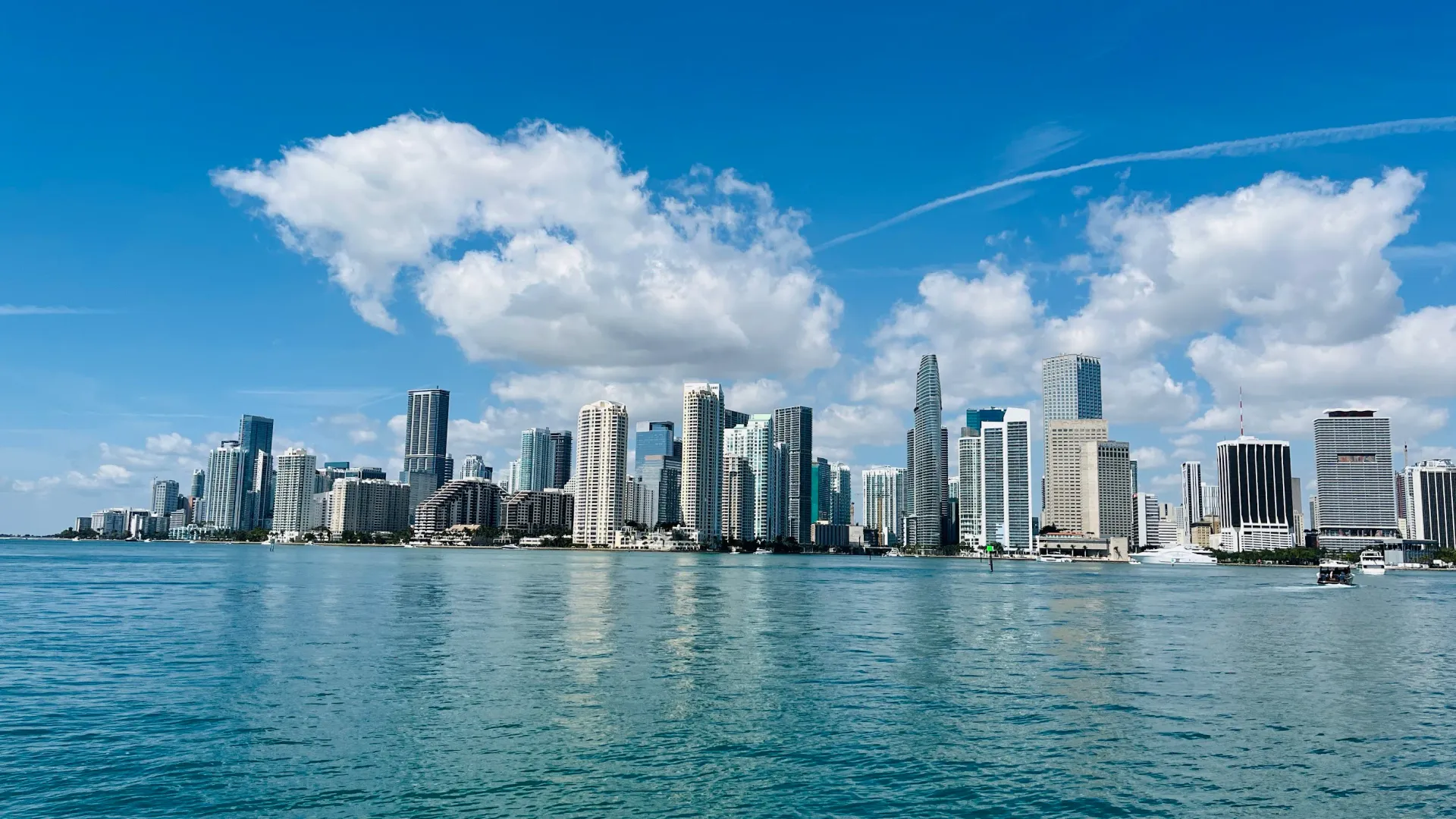
- Downtown Miami and Brickell skyline views
- The entrance to the Miami River
- Miami's architecture and waterfront history
Unlike renting a boat yourself, the passenger isn't responsible for operating the vessel.
You board, experience Miami, and let the professional crew handle the water.
Private Boat Rentals Can Put You Behind the Wheel
A private boat rental in Miami can be a completely different experience.
The type of recreational rentals we're describing are generally intended for small groups of up to six passengers and may be offered without a captain, meaning the renter becomes responsible for operating the boat.
That distinction matters.
Depending on the renter's age and the specific operation, Florida boating-safety requirements may apply before someone can legally operate the vessel.
Instead of following a narrated sightseeing itinerary, the appeal is independence.
You're renting access to the boat and spending time on Biscayne Bay with your own small group.
For some families, that's exactly what they're looking for.
For others, having responsibility for the vessel isn't what they want on vacation.
Neither experience is automatically better. They're fundamentally different products.
Miami Private Yacht Charters Include a Captain
A Miami private yacht charter changes the experience again.
Unlike the self-operated recreational rentals we're describing, private yacht charters are typically operated with a captain and professional crew.
The private charters we're referring to are generally designed for groups of up to 13 passengers, creating a more intimate environment for families, friends, birthdays, celebrations, and other private occasions.
Yachts can also vary enormously in size.
You might see:
- 36-foot yachts
- 40-foot yachts
- 50-foot yachts
- 60-foot yachts
- Much larger luxury vessels
But here's something we've learned after years around this industry:
The biggest vessel doesn't automatically create the best experience.
Bigger Isn't Always Better on Biscayne Bay
People naturally associate a larger yacht with a better experience.
But think about what happens once you're aboard.
You're no longer standing on the dock looking at the vessel.
You're experiencing what's happening inside it and around it.
What you're likely to remember is:
- Who you were with
- How you were treated
- Where you went
- What you saw
- How comfortable you felt
- The quality of the service
- The memories you created
That's why service, value, and experience matter more than simply choosing the largest vessel available.
The yacht creates the setting.
The experience creates the memory.
Three Different Ways to Experience the Same Biscayne Bay
This is what makes Miami's waterfront tourism interesting.
You can experience the same body of water in completely different ways.
Sightseeing cruise: approximately 90 minutes, professional captain and crew, established sightseeing itinerary, and vessels capable of accommodating much larger groups.
Private recreational boat rental: smaller groups, greater independence, and—in the type of rental we're describing—the renter operates the vessel.
Private yacht charter: smaller private group, captain-operated vessel, more privacy, and an experience built around your party rather than a shared sightseeing departure.
They shouldn't be treated as interchangeable.
The right question isn't:
“What's the biggest boat I can get?”
The better question is:
“How do I want to experience Miami from the water?”
Answer that first, and choosing between sightseeing, recreational boating, and a private charter becomes much easier.
When Miami Gets Busy, the Water Gets Busy Too
The Miami boating tourist industry doesn't operate separately from the rest of the city.
When Miami fills up for major events, holidays, winter travel, spring break, or other high-demand periods, that activity eventually reaches the waterfront.
More visitors can mean more departures, more recreational activity, and heavier movement across the bay.
For people working on the water, the change is immediately noticeable.
Miami gets busier—and Biscayne Bay reflects it.
Biscayne Bay Has Its Own Version of Traffic
Miami drivers know what happens to I-95 when the city gets crowded.
There is a similar concept on the water.
During high-activity periods, established navigation areas may see increased vessel traffic, requiring greater awareness of what's happening ahead, behind, and around each boat.
The water doesn't have painted highway lanes everywhere telling vessels exactly where to stay.
That makes marine navigation, situational awareness, and responsible operation especially important when activity increases.
From the passenger's perspective, it may simply look like Miami having a busy day on the water.
From an operational perspective, every additional vessel becomes another moving part of the environment.
Miami's Boating Seasons Aren't All the Same
Another factor shaping activity on Biscayne Bay is the time of year.
South Florida can be enjoyed throughout much of the year, but temperature, rainfall, wind, humidity, seasonal weather patterns, and daylight hours change from season to season.
Those differences can influence when people want to get on the water and what conditions they may encounter.
Anyone planning time on the bay can learn more in our Biscayne Bay weather by season guide, which breaks down how conditions change throughout the year.
The important point is that seasonal conditions and tourism patterns work together.
A busy period isn't defined only by how many people are visiting Miami. What's happening on the water matters too.
Major Miami Events Create Waterfront Demand
Miami has become a global destination for major events.
Art Basel Miami Beach, Formula 1, professional sports, international events, concerts, holidays, and major travel weekends can bring large numbers of additional visitors into the region.
Many of those travelers don't spend their entire trip attending the event that brought them here.
They explore.
They eat at local restaurants. They visit Downtown Miami. They shop. They discover attractions. And naturally, some eventually make their way toward the waterfront.
That's where the Miami marine tourism economy connects with the larger tourism economy of the city.
One event can create spending far beyond the event itself.
More Demand Should Never Mean Less Attention
High demand is good for tourism.
But from an operator's perspective, a packed city doesn't change the standard that should be delivered to the passenger.
Service shouldn't decline because Miami is busy.
The experience shouldn't feel rushed because demand increased.
And operational attention should never decrease simply because there are more people trying to get on the water.
If anything, increased marine activity requires greater awareness.
That's an important distinction between tourism demand and operational responsibility.
One can increase dramatically.
The other should remain consistent.
The Bay Is a Real-Time Reflection of Miami
This is one of the interesting things about spending years around Miami's waterfront.
You can sometimes see the rhythm of the city simply by watching Biscayne Bay.
A major weekend feels different from a quiet weekday.
A holiday can change the amount of recreational activity.
Seasonal travel changes the people arriving in Miami.
Major events bring entirely new groups of visitors.
Yet the underlying attraction remains the same:
people want to experience a city surrounded by water from the water itself.
That's why the Miami boating tourist industry is connected so closely to the larger tourism engine of South Florida.
When Miami grows busier, the effect doesn't stop at the shoreline.
It moves onto Biscayne Bay.
Why Miami Looks Different From Biscayne Bay
Miami boat tourism exists for a reason that goes much deeper than simply putting visitors on the water.
Miami itself looks different from Biscayne Bay.
From land, visitors experience the city in pieces. Downtown Miami, Brickell, Miami Beach, PortMiami, the islands, the Miami River, bridges, and waterfront neighborhoods can feel like completely separate destinations.
From Biscayne Bay, those pieces begin connecting.
You can see how the skyline meets the shoreline, how the islands sit between mainland Miami and Miami Beach, how PortMiami occupies its position in the harbor, and how waterways have influenced the city's development.
From the water, Miami stops looking like separate neighborhoods and starts looking like one connected waterfront city.
The Islands Reveal Miami's Relationship With the Water
Some of Miami's most recognizable communities were shaped around their relationship with Biscayne Bay.
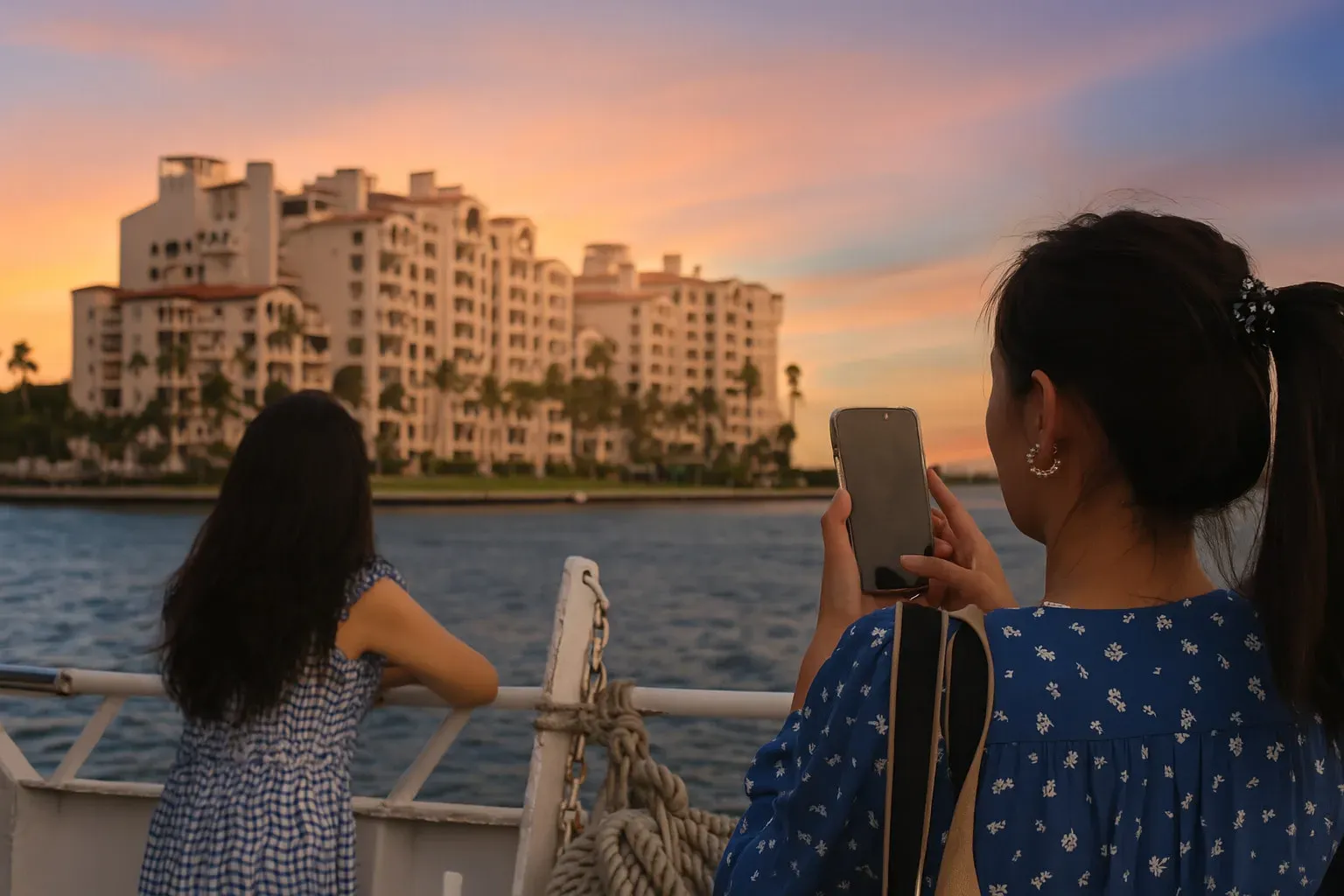
Star Island, Palm Island, Hibiscus Island, the Venetian Islands, and Fisher Island take on a completely different perspective when viewed from the water.
From land, you might cross a causeway or pass an entrance without realizing how these communities fit into Miami's geography.
From the bay, that relationship becomes visible.
- You see the shorelines.
- You see the channels separating the islands.
- You see waterfront architecture facing the water instead of the street.
And you begin to understand why island living, waterfront real estate, and boating culture became such recognizable parts of Miami's identity.
That relationship between land and water is one of the foundations of today's Miami boating tourism industry.
PortMiami Shows the Working Side of the Waterfront
Then there is PortMiami.
Most visitors associate it with enormous cruise ships departing for the Caribbean and other destinations.
From Biscayne Bay, however, you see something much larger.
Cruise terminals, cargo infrastructure, working vessels, massive ships, bridges, and the Downtown Miami skyline can occupy the same view.
Understanding how PortMiami helped build modern Miami adds another layer to what visitors are actually seeing from the water.
It reveals an important part of the city's identity:
Miami's waterfront isn't only recreational. It's residential, commercial, industrial, international, and deeply connected to tourism.
That combination is part of what makes experiencing Miami from Biscayne Bay so different from simply seeing the city from land.
The Miami River Connects the City's Past With Its Present
Then there is one of the most important waterways in Miami's story:
the Miami River.
Today, the river meets Biscayne Bay beside a modern skyline filled with residential towers, hotels, restaurants, offices, and waterfront development.
But the relationship between Miami and its waterways existed long before those skyscrapers.
Water influenced settlement, transportation, commerce, development, and ultimately the identity of the city that visitors recognize today.
That's why understanding how Biscayne Bay helped shape modern Miami provides important context for understanding today's waterfront.
The modern Miami boat tourism industry didn't appear independently from the city around it.
It developed in a destination whose history, geography, economy, and identity have always been connected to water.
The Miami Skyline Makes More Sense From a Distance
The Miami skyline is impressive from the streets.
But Biscayne Bay gives visitors something land cannot:
Distance and perspective.
Instead of standing underneath individual buildings, you can see entire sections of Miami rising together along the shoreline.
Downtown transitions toward Brickell.
Bridges cross between communities.
PortMiami sits prominently within the bay.
Islands occupy the foreground while towers rise behind them.
From one moving vantage point, visitors can see how many of Miami's defining features relate geographically to one another.
That's more than a beautiful photograph.
It's a visual explanation of how Miami developed around the water.
Seeing Miami From the Water Changes Your Understanding of the City
This may be one of the most overlooked parts of Miami boat tourism.
After experiencing the city from Biscayne Bay, places that previously seemed disconnected begin making geographical sense.
You understand:
- Where Miami Beach sits relative to Downtown
- How the islands are positioned throughout the bay
- Where the Miami River enters Biscayne Bay
- How PortMiami fits between the city and the water
- Why so much waterfront development faces the bay
- Why boating became embedded in Miami's tourism identity
And that brings the entire idea back to something simple.
People don't experience Biscayne Bay merely because Miami happens to have water.
The water helped shape the Miami they're coming to see.
That history, geography, and modern waterfront culture are part of what transformed boating into such an important part of the city's tourism economy.
Miami boat tourism is ultimately an extension of Miami itself—a city whose past, present, and future are inseparable from the water surrounding it.
Why Miami Boat Tourism Matters to Families and the Local Economy
Miami boat tourism isn't only about what happens during the time a visitor spends on Biscayne Bay.
Its impact extends into the way families experience Miami, how visitors spend their time in the city, and how tourism dollars circulate through the surrounding economy.
A family may purchase tickets for an experience on the water, but their day rarely begins and ends with that transaction.
They may pay for parking, eat lunch, buy drinks, visit nearby attractions, shop, use transportation, or continue exploring Downtown Miami afterward.
That means one decision to experience Miami from the water can create spending well beyond the waterfront itself.
Families Create a Different Kind of Tourism Demand
Families are especially important because they rarely travel as a single customer.
They travel as groups.
Parents may be traveling with young children, teenagers, grandparents, or several generations together.
Finding an activity that works for everyone can be difficult.
The water creates a different opportunity.
A 90-minute sightseeing experience can give multiple generations a shared activity without requiring an entire day of their vacation.
Children can watch cruise ships, yachts, wildlife, and the changing scenery.
Adults can appreciate the architecture, waterfront communities, history, and skyline.
Grandparents can experience many of those same views without having to travel individually between every location.
One activity can serve several generations for completely different reasons.
That makes family travel an important part of the Miami boating tourism economy.
A Boat Ticket Can Generate Spending Beyond the Boat
This is where the economic impact becomes larger than the original reservation.
Imagine a family of five deciding to spend part of the day around Miami's waterfront.
Their spending might include:
- Transportation into Downtown Miami
- Parking
- Food and beverages
- Shopping
- Souvenirs
- Nearby attractions
- Additional activities
- Hotel accommodations elsewhere in the city
Not every family purchases all of those things.
That's not the point.
The point is that tourism spending moves.
A visitor attracted by one experience can generate revenue for businesses that had nothing to do with selling the original ticket.
This is sometimes described as the tourism multiplier effect: visitor spending can circulate across multiple parts of a local economy rather than remaining with a single business.
The Waterfront Helps Keep Visitors Exploring Miami
There is another economic benefit that's easy to overlook.
Activities give visitors reasons to stay engaged with a destination.
Someone who comes Downtown for an experience on Biscayne Bay may discover a restaurant they didn't know existed.
A family may spend additional time at Bayside.
Another visitor may decide to explore Brickell, Little Havana, Miami Beach, or another part of the city afterward.
That creates a connection between waterfront tourism and the broader Miami visitor economy.
The water may be what initially attracts someone.
The rest of Miami can benefit from what they do before and afterward.
International Visitors Expand That Economic Reach
Miami also welcomes travelers from throughout Latin America, Europe, the Caribbean, Asia, and across the United States.
That matters economically because tourism brings spending into the region from outside the local economy.
And boating has an advantage as an international attraction:
Much of the experience is visual.
The skyline doesn't require translation.
Neither does the scale of PortMiami, the architecture of waterfront homes, the islands across Biscayne Bay, or the excitement of seeing marine wildlife.
Live narration in English and Spanish adds context, while modern translation technology can help travelers who speak other languages understand even more.
That makes Miami tourism on the water accessible to an unusually broad visitor base.
Tourism on the Water Supports More Than Tourism on the Water
This is ultimately why the economic importance of the industry shouldn't be measured only by how many tickets are sold.
The real footprint is larger.
- Visitors need somewhere to stay.
- They need transportation.
- They eat.
- They shop.
- They explore.
- They purchase other experiences.
And families often make several of those decisions together.
Miami's marine tourism economy feeds into a much larger network of businesses that depend on people choosing Miami as a place worth visiting.
That doesn't mean boating is responsible for Miami's tourism economy.
It means boating is one component of an interconnected tourism system—and in a city defined so strongly by its relationship with water, it's an important one.
When Families Enjoy Miami, the Economic Impact Travels With Them
After years in this industry, we've seen something simple happen repeatedly.
A family doesn't experience Miami as separate economic categories.
They don't think:
"Now we're supporting marine tourism."
"Now we're supporting hospitality."
"Now we're supporting a restaurant."
They're simply having a day in Miami.
But economically, their spending is moving through all of those sectors.
That's why the importance of the Miami boat tourism industry reaches farther than the dock.
The experience happens on Biscayne Bay. The economic impact can continue throughout Miami.
What Would Bayside Marketplace Lose Without Boating Tourism?
Imagine Bayside Marketplace without boats carrying visitors onto the water throughout the day.
The restaurants would still be there.
The stores would still be there.
The music, waterfront, observation wheel, and Downtown Miami location wouldn't disappear.
But a major reason people continuously arrive at Bayside throughout different parts of the day would be gone.
That's an overlooked contribution of the Miami boat tourism industry:
Boating doesn't only use Bayside's foot traffic. It helps create it.
Boat Departures Give People a Reason to Arrive
Every scheduled departure creates an arrival.
Passengers don't magically appear on the vessel.
They travel to the waterfront, find parking or transportation, walk through the marketplace, locate their check-in point, wait for departure, and eventually return after their experience.
That creates a continuous movement of people through Bayside.
And importantly, those visitors aren't necessarily arriving because they planned to shop.
The boating experience may be what brought them there in the first place.
Once they're there, Bayside has the opportunity to capture more of their time.
Sunset Cruises Extend Waterfront Activity Into the Evening
Now imagine removing the Miami Sunset Cruise from that equation.
The sunset itself isn't just another departure time.
It creates a reason for visitors to arrive at the waterfront later in the day, when someone who spent the afternoon somewhere else in Miami might otherwise never have visited Bayside.
A couple arrives early.
A family has time before departure.
Someone buys a drink.
Someone else grabs dinner.
Parents walk through the marketplace while their children spot something they want.
That is foot traffic created around an experience.
And when multiple waterfront businesses are creating departures around the same period, those individual groups collectively contribute to the evening activity surrounding the marina.
Night Cruises Give Bayside Another Tourism Window
Then the sun goes down.
Without nighttime experiences, part of the waterfront tourism day would simply end earlier.
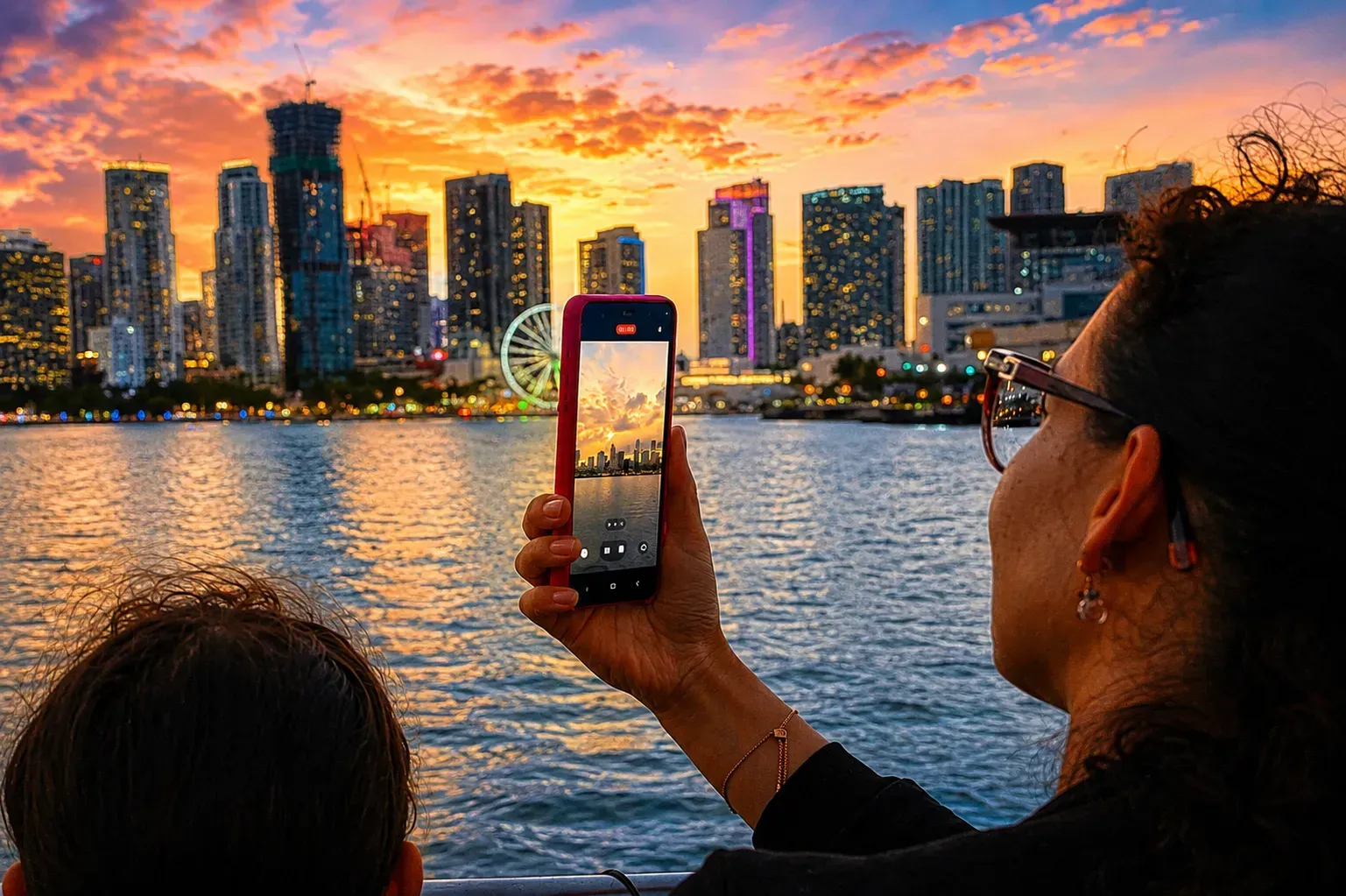
A Miami Night Cruise gives visitors another reason to arrive after dark—when the skyline is illuminated and the atmosphere of Downtown Miami has completely changed.
That creates another tourism window:
Daytime visitors → sunset visitors → nighttime visitors.
These aren't necessarily the same people.
Each departure period can attract another group into the marketplace.
That matters because extending tourism activity across more hours of the day creates more opportunities for surrounding businesses to interact with visitors.
The Passenger Doesn't Disappear After the Boat Returns
There's another part of this cycle that matters.
Every departure eventually creates a return.
When passengers step back onto land, they're already at a major waterfront marketplace.
Some leave immediately.
Others don't.
Someone decides they're hungry.
A family walks around.
Children want candy or ice cream.
A couple decides to have another drink.
Someone buys a souvenir they noticed before departure.
Others simply stay and enjoy the waterfront.
The boating company doesn't control where those visitors spend money afterward.
That's exactly the point.
The visitor has returned to Bayside, and the surrounding businesses now have another opportunity to earn that customer's business.
Boating Helps Create a Full-Day Tourism Cycle
This is where the relationship between Miami boating tourism and Bayside Marketplace becomes especially interesting.
A waterfront attraction isn't valuable only because of how many people experience it.
It can also be valuable because of when it brings those people into the surrounding destination.
Morning and daytime departures create daytime movement.
Miami Sunset Cruise experiences help bridge the transition into evening.
Miami Night Cruise experiences give visitors a reason to arrive after dark.
Together, water-based experiences can help create something economically valuable:
a tourism cycle that continues across multiple parts of the day.
Without the Boats, Bayside Would Still Exist—But the Rhythm Would Change
Bayside Marketplace doesn't depend on one company, one vessel, or one attraction.
But remove the entire Miami boat tourism industry from its waterfront and the movement of people through the destination would change.
Fewer people would have a boating-related reason to arrive.
There would be fewer pre-departure waiting periods.
Fewer passengers would return through the marketplace after being on the water.
And two valuable tourism periods—sunset and nighttime waterfront activity—would lose part of what currently draws visitors there.
That's the larger economic relationship.
Bayside gives boating businesses access to the waterfront.
Boating businesses give visitors another reason to come to Bayside.
And the restaurants, retailers, bars, entertainment venues, and other businesses surrounding them have an opportunity to benefit from that movement.
That's why boating isn't simply something happening at Bayside Marketplace.
It's part of what keeps people moving through it.
Miami's Boating Industry Shares the Water With Wildlife
Behind Miami's skyline, marinas, bridges, and waterfront homes is something visitors can easily overlook:
Miami's waterways are a living marine environment.
Over the years, we've encountered bottlenose dolphins, manatees, rays, tarpon, and other marine life while operating around Miami.
Those encounters aren't scheduled or guaranteed.
That's what makes them special.
Wildlife Is Never Part of the Schedule
A sightseeing departure has a time.
Wildlife doesn't.
Dolphins and manatees are wild animals moving through their natural environment, not attractions that appear on demand.
When passengers happen to encounter marine life, it becomes an unexpected part of experiencing Miami from the water.
The city provides the scenery. Nature occasionally adds something of its own.
A Major City and a Marine Ecosystem Exist Side by Side
That's one of the most interesting contrasts within Miami tourism on the water.
Look in one direction and you may see skyscrapers, cruise ships, bridges, and waterfront development.
Look toward the water and a dolphin may surface or a ray may move beneath the boat.
Miami doesn't have to choose between being a major international city and having a South Florida marine ecosystem.
Both exist in the same environment.
Responsible Boating Means Respecting Marine Life
Sharing the water creates responsibility.
Manatee protection zones, posted speed restrictions, navigational rules, and responsible vessel operation help protect an environment used by both people and wildlife.
Marine animals should be observed responsibly—not chased, harassed, or treated as props for photographs.
For the Miami boating tourist industry, protecting the environment isn't separate from tourism.
The environment is part of what makes tourism on the water possible.
Marine Life Adds Another Layer to the Miami Experience
Miami is known around the world for beaches, architecture, nightlife, luxury, palm trees, and waterfront living.
But South Florida marine life belongs in that identity too.
Visitors may board expecting mansions, islands, and skyline views.
Then somebody spots a dolphin.
A manatee surfaces.
A ray appears beneath the water.
Suddenly, everyone is looking in the same direction.
Miami's waterfront isn't a stage built exclusively for tourism. It's a living environment that tourism gets to experience.
And preserving that relationship between boating, wildlife, and the marine environment is part of protecting the future of Miami boat tourism itself.
Different Boats, Different Rules, One Miami Boat Tourism Economy
Miami boat tourism is not one business model.
That's one of the most important things to understand about the industry.
A large sightseeing vessel does not operate the same way as a recreational boat rental.
A recreational rental doesn't operate like a private yacht charter.
A yacht charter doesn't operate like a Jet Ski rental.
Different vessels serve different customers, operate under different structures, and can face different licensing, inspection, insurance, safety, and passenger requirements.
But economically, they all contribute to something larger:
Miami's tourism economy.
Sightseeing Cruises Operate as Commercial Passenger Experiences
Miami sightseeing vessels are built to move larger numbers of visitors through a professionally operated experience.
The sightseeing vessels we work with can accommodate approximately 120 passengers, with licensed captains and professional crew responsible for the vessel and passengers.
Federal rules become especially important here.
When a vessel carries more than six passengers, with at least one passenger for hire, the U.S. Coast Guard generally requires the vessel to have a valid Certificate of Inspection (COI) and to be operated by an appropriately credentialed mariner.
For the larger sightseeing vessels we work with in Miami, captains hold 50-ton to 100-ton Coast Guard Master credentials, depending on the vessel and assignment.
The exact credential required depends on the vessel and operation—not simply the fact that it's a sightseeing boat.
That's an important distinction.
Commercial sightseeing is one specialized segment of Miami boat tourism—not the rulebook for the entire industry.
Miami Boat Rentals Create a Completely Different Experience
Now consider Miami boat rentals.
In this part of the industry, the customer may actually become the person operating the vessel.
Florida currently defines a livery as a business offering vessels for rent or lease without also providing—or requiring the renter to provide—a U.S. Coast Guard-licensed captain. Covered liveries operating on Florida waters need an FWC Livery Operator Permit.
That creates an entirely different relationship between the business, vessel, and customer.
The rental company has responsibilities.
The renter has responsibilities.
And the person taking control of the vessel has responsibilities.
Florida requires applicable liveries to provide pre-rental and pre-ride safety instruction, maintain required records, and meet insurance and other operating requirements.
For motorboats of 10 horsepower or more, operators born on or after January 1, 1988 generally must satisfy Florida's boating-safety education requirements unless an exemption applies.
That's why a recreational rental should never be treated as simply:
“Here's the boat. Have fun.”
There's an actual operating framework behind legitimate Miami boat rentals.
Miami Yacht Rentals Operate Under Another Structure
Then you have Miami yacht rentals and private charters.
These can operate under a different legal structure again.
One important example is a legitimate bareboat charter, where the charterer assumes possession and control of the vessel.
Under Coast Guard guidance, bareboat charter operations can accommodate up to 12 passengers plus the charterer, excluding crew. The charterer must also retain genuine control over selecting the captain and crew rather than having the vessel owner dictate the crew arrangement.
That distinction matters.
A 50-foot yacht may look like simply another boat to someone walking through a marina.
Operationally, it can represent a completely different tourism product.
Different experience. Different passenger relationship. Different responsibilities.
Jet Ski Rentals Add Another Part of the Industry
Then there are personal watercraft.
Jet Skis bring another customer into the Miami boat tourism economy—someone looking for speed, independence, and a completely different experience from sightseeing or yachting.
Florida has specific requirements for personal watercraft as well.
A person must be at least 14 years old to operate a PWC and at least 18 years old to rent one. Florida's boating-safety education requirements also apply to qualifying operators.
Again, the point isn't that one category is more regulated or more important.
The point is:
They're different businesses serving different tourism demand.
Different Rules Exist Because the Experiences Are Different
That's what makes the structure of Miami boat tourism interesting.
A large inspected sightseeing vessel creates one operating environment.
A recreational rental creates another.
A yacht charter creates another.
A personal-watercraft operation creates another.
They shouldn't all follow identical rules because they aren't providing identical services.
The vessel changes.
The customer relationship changes.
Who controls the vessel changes.
Passenger capacity changes.
The level and type of responsibility can change.
Different experiences require different operating structures.
Every Legitimate Segment Makes Miami More Competitive
Now bring that back to the tourism economy.
Miami doesn't become a stronger destination by having only sightseeing cruises.
It doesn't become stronger by having only Miami boat rentals.
It doesn't become stronger by having only Miami yacht rentals.
And it doesn't become stronger by having only Jet Skis.
Visitors want choices.
One family wants an affordable sightseeing experience.
Another wants the independence of renting a boat.
Another group wants a private yacht.
Another traveler wants the adrenaline of getting on a Jet Ski.
- Different budgets.
- Different group sizes.
- Different expectations.
- Different experiences.
That variety allows Miami to capture tourism demand that no single boating product could capture by itself.
Competition Can Grow the Entire Miami Boat Tourism Industry
Businesses will compete.
That's normal.
But competition doesn't mean one category has to destroy another.
A sightseeing company can have a great year.
A yacht company can have a great year.
A boat-rental business can expand.
A Jet Ski operator can sell out.
All four things can happen at the same time.
And when they do, Miami has attracted four different types of customers into its tourism economy.
That's the bigger picture.
Individual companies compete for individual reservations.
The Miami boat tourism industry collectively competes for something much larger: keeping Miami one of the world's most desirable places to experience life on the water.
There Doesn't Have to Be One Winner
That's what makes this industry powerful.
There isn't one winner.
Sightseeing wins when sightseeing grows.
Boat rentals win when recreational boating grows.
Yacht charters win when private tourism grows.
Jet Ski businesses win when adventure tourism grows.
And when legitimate operators across those categories succeed, Miami's tourism economy wins with them.
More choices make the destination more attractive.
More price points make water experiences accessible to different travelers.
More legitimate businesses create a deeper tourism marketplace.
And more ways to experience Miami give visitors more reasons to choose the city in the first place.
That's why the strength of Miami boat tourism doesn't come from everybody doing the same thing.
It comes from an entire industry doing different things successfully—while contributing to the same Miami tourism economy.
How Miami Boat Tourism Created a More Specialized Tourism Economy
Over the last 20 years, one of the biggest changes in Miami boat tourism has been the number of specialized businesses that now exist around the water.
The industry didn't simply get larger.
It became more specialized.
Sightseeing, yacht charters, recreational rentals, Jet Skis, parasailing, wakeboarding, fishing, and newer attractions such as jet cars all require different equipment, knowledge, personnel, and operating models.
That diversification has created something Miami had much less of 20 years ago:
an increasingly specialized marine-tourism workforce.
One Captain Cannot Automatically Do Every Job
A boat may be involved in several water activities, but that doesn't make the operations identical.
Consider parasailing.
Someone has to safely operate the tow vessel while another crew member manages passengers and specialized equipment.
Wakeboarding creates another operating environment.
A sightseeing vessel carrying a large group requires a completely different operation.
Jet Ski experiences require another set of procedures.
Yacht charters serve another customer entirely.
The more specialized the attractions become, the more specialized the people behind them have to become.
That's economic development through skills—not simply headcount.
New Attractions Create New Marine Skills
Twenty years ago, nobody could predict every water activity visitors would be booking in Miami today.
Now we have jet cars entering the tourism marketplace alongside experiences that have existed for decades.
Every time a legitimate new category gains traction, businesses have to learn how to support it.
That can create demand for people who understand:
- Specialized marine equipment
- Personal watercraft
- Tow-sport operations
- Vessel maintenance
- Electronics and diagnostics
- Marine engines
- Safety procedures
- Equipment repair
- Waterfront logistics
Those skills have value beyond one individual attraction.
As Miami's water attractions become more diverse, the knowledge supporting them becomes more valuable too.
Tourism Can Create Marine Career Paths
This is where the economic impact becomes more interesting.
Someone can enter the industry in an entry-level waterfront position and begin learning how marine tourism actually works.
Over time, that person may develop experience in operations, sales, vessel maintenance, equipment, management, guiding, or professional vessel operation.
Another person may eventually start a business.
Someone else may become a marine mechanic.
Another may pursue professional maritime credentials.
A tourism job can become a marine career.
That's a different economic contribution than simply counting how many people worked on a particular day.\
Innovation Creates Business for Other Marine Businesses
New attractions also create business-to-business demand.
A tourism company doesn't manufacture everything it needs.
Equipment breaks.
Engines require parts.
Electronics need servicing.
Vessels need maintenance.
Specialized gear eventually needs replacement.
That means growth in Miami's marine tourism sector can create customers for other businesses that tourists may never see.
Marine suppliers.
Repair facilities.
Equipment companies.
Technicians.
Fabricators.
Service yards.
One tourism business can become another marine business's customer.
That's an important layer of the economy we've seen develop around the industry.
Miami Now Has an Ecosystem of Water-Based Expertise
That's one of the clearest differences between the industry we saw years ago and the one operating today.
Miami hasn't simply accumulated more water attractions.
It has accumulated knowledge, skills, equipment, businesses, and professionals capable of supporting increasingly specialized experiences.
And that gives the city an economic advantage.
When the next water attraction appears, it doesn't have to emerge in a place with no marine infrastructure or workforce.
It enters a city that already understands how to build businesses around the water.
That's how Miami boat tourism has matured: not simply by creating more activities, but by creating an economy increasingly capable of supporting whatever comes next.
Miami Boat Tourism Helps Sell Miami to the World
Miami boat tourism adds something extremely valuable to Miami's economy: another reason for people to travel here.
Visitors don't only come for hotels or restaurants.
They come because Miami promises experiences.
The beaches.
The culture.
The weather.
The nightlife.
The Everglades.
And importantly, the ability to experience a city built around the water.
That makes boating part of the tourism product Miami can present to the world.
The Industry Helps Turn Miami Into an Experience
A destination needs more than places to sleep and eat.
It needs things people actually want to do.
That's where the Miami boating industry creates economic value.
Sightseeing, recreational boating, yachting, fishing, Jet Skis, parasailing, wakeboarding, and other water activities give travelers experiences they can associate specifically with visiting South Florida.
The same applies beyond the coastline.
A visitor may also want to experience the Florida Everglades, where airboat rides provide a completely different way to experience South Florida's relationship with water.
Different experience.
Same larger tourism economy.
Attractions Create the Demand Other Businesses Depend On
Hotels need guests.
Restaurants need diners.
Transportation companies need passengers.
Retailers need shoppers.
But first, Miami needs travelers.
Attractions help create that demand.
Nobody books a flight because Miami has parking garages.
People travel because they believe there are experiences waiting for them once they arrive.
The Miami boat tourism industry contributes to that reason.
And once the traveler chooses Miami, dozens of businesses that never operated a boat can have an opportunity to benefit from that decision.
Water Experiences Give Miami Something to Market
Think about how Miami is presented to travelers.
Images of boats, yachts, beaches, palm trees, waterfront homes, cruise ships, and people enjoying the water appear constantly in travel marketing and social media.
There's economic value in being able to turn that imagery into real experiences visitors can actually purchase.
Instead of simply seeing Miami's waterfront lifestyle in an advertisement, travelers can participate in it once they arrive.
That makes the industry's role bigger than operating vessels.
It helps turn Miami's image into a tourism product.
The Customer May Come for the Experience, but Miami Receives the Visitor
That's the economic connection.
A boating business may attract the customer with one specific experience.
But that customer still needs a place to sleep.
They still eat.
They still move around the city.
They may visit other attractions.
And they may bring their family with them.
The individual business earns the reservation. Miami receives the traveler.
That's why attracting visitors matters so much more than looking only at the value of a boat ticket.
Miami Boat Tourism Creates Reasons to Choose Miami
That's ultimately what this industry contributes.
It creates reasons to come.
Reasons to bring the family.
Reasons to experience the waterfront.
Reasons to photograph Miami.
Reasons to share Miami.
Reasons to return.
And every additional reason strengthens the tourism product the city can offer to the rest of the world.
That's why Miami boat tourism matters to the broader economy.
The industry doesn't only make money from people who are already here. It helps make Miami a place people want to come experience in the first place.
And once those visitors arrive, the economic opportunity belongs to Miami.
Frequently Asked Questions About Miami’s Boating Tourism Economy
How does the boating industry help Miami’s economy?
The boating industry attracts visitors who spend throughout the city on hotels, restaurants, transportation, shopping, entertainment, and local attractions. The economic impact can extend well beyond the original experience on the water.
Does boating tourism create jobs in Miami?
Yes. The industry supports captains, crew members, mechanics, tour guides, dock personnel, instructors, sales teams, reservation staff, and marine professionals, creating employment that supports local households.
Why are water attractions important to tourism in Miami?
Water attractions give travelers more reasons to visit and more things to do once they arrive. Sightseeing cruises, boat rentals, yacht charters, Jet Skis, parasailing, wakeboarding, fishing, and newer experiences such as jet cars broaden Miami’s tourism offering.
How does boating tourism help Bayside Marketplace?
Scheduled departures bring visitors into Bayside throughout the day and evening, generating foot traffic that surrounding restaurants, retailers, entertainment venues, and other businesses have an opportunity to capture.
Does marine tourism benefit businesses that don't operate boats?
Yes. Marine tourism creates demand for fuel, repairs, equipment, parts, insurance, marina services, and other professional services, extending economic activity beyond the businesses visitors see.
Why do different boating experiences matter to Miami’s economy?
Different activities serve different budgets, ages, group sizes, and interests, allowing tourism in Miami and the boating industry to reach a much broader visitor market.
Can new water attractions create new economic opportunities?
Yes. New concepts can generate new businesses, specialized jobs, marina activity, equipment demand, and additional visitor spending. The evolution from established activities to newer experiences such as jet cars shows how the industry can continue creating economic opportunities.
Why does supporting legitimate local operators matter?
Responsible local operators help sustain employment, waterfront commerce, marine services, and the local business ecosystem that supports Miami tourism.
Why is the boating industry important to Miami’s future?
Miami’s relationship with the water is part of its global identity. A strong, responsible boating industry helps turn that identity into tourism activity, employment, business opportunities, and long-term economic value for the city.
For questions about reservations, boarding, policies, sightseeing experiences, and planning your trip, visit our Miami Boat Tours FAQ.
Miami Boat Tourism Is More Than an Experience on the Water
After nearly 20 years in this industry, we've learned that Miami boat tourism is not defined by one boat, one company, or one type of experience.
It's part of something much larger.
It helps attract visitors, supports working families, creates opportunities for local businesses, and gives people from around the world another way to understand what makes Miami different.
Miami boating tourism continues to change because Miami continues to change. New experiences will arrive, businesses will evolve, and the next generation will find new ways to build careers and opportunities around the water.
But the purpose remains remarkably simple:
Give people a reason to experience Miami, and Miami's economy has an opportunity to benefit from their visit.
That's why sightseeing cruises, boat rentals, yacht charters, Jet Skis, parasailing, wakeboarding, fishing, and the experiences that haven't even been invented yet all have a place here.
There doesn't have to be one winner.
When responsible businesses succeed, workers succeed. When visitors keep coming, local businesses have opportunities. And when the industry keeps evolving, Miami tourism becomes stronger with it.
For visitors, the experience may only last a few hours.
For Miami, its impact can reach much further.
And for anyone who wants to understand why the water remains such an important part of the Magic City, the best place to begin is simple: