First Time in Miami? The Complete Guide for First-Time Visitors
First Time in Miami? The Complete Guide for First-Time Visitors
First time in Miami? This complete guide for first-time visitors will help you experience the city beyond the postcards—from South Beach and Ocean Drive to Little Havana, Downtown Miami, Biscayne Bay, the Everglades, and the neighborhoods, food, beaches, and attractions that make Miami one of the world's most exciting destinations.
Miami can also be overwhelming when you've never been here before. Traffic is real. Parking can be challenging. The weather can change in minutes. And Miami Beach, South Beach, Downtown, Brickell, Wynwood, and Little Havana each offer a completely different experience. That's why planning your first trip to Miami isn't about squeezing every attraction into a checklist. It's about knowing what's worth your time and how to experience it.
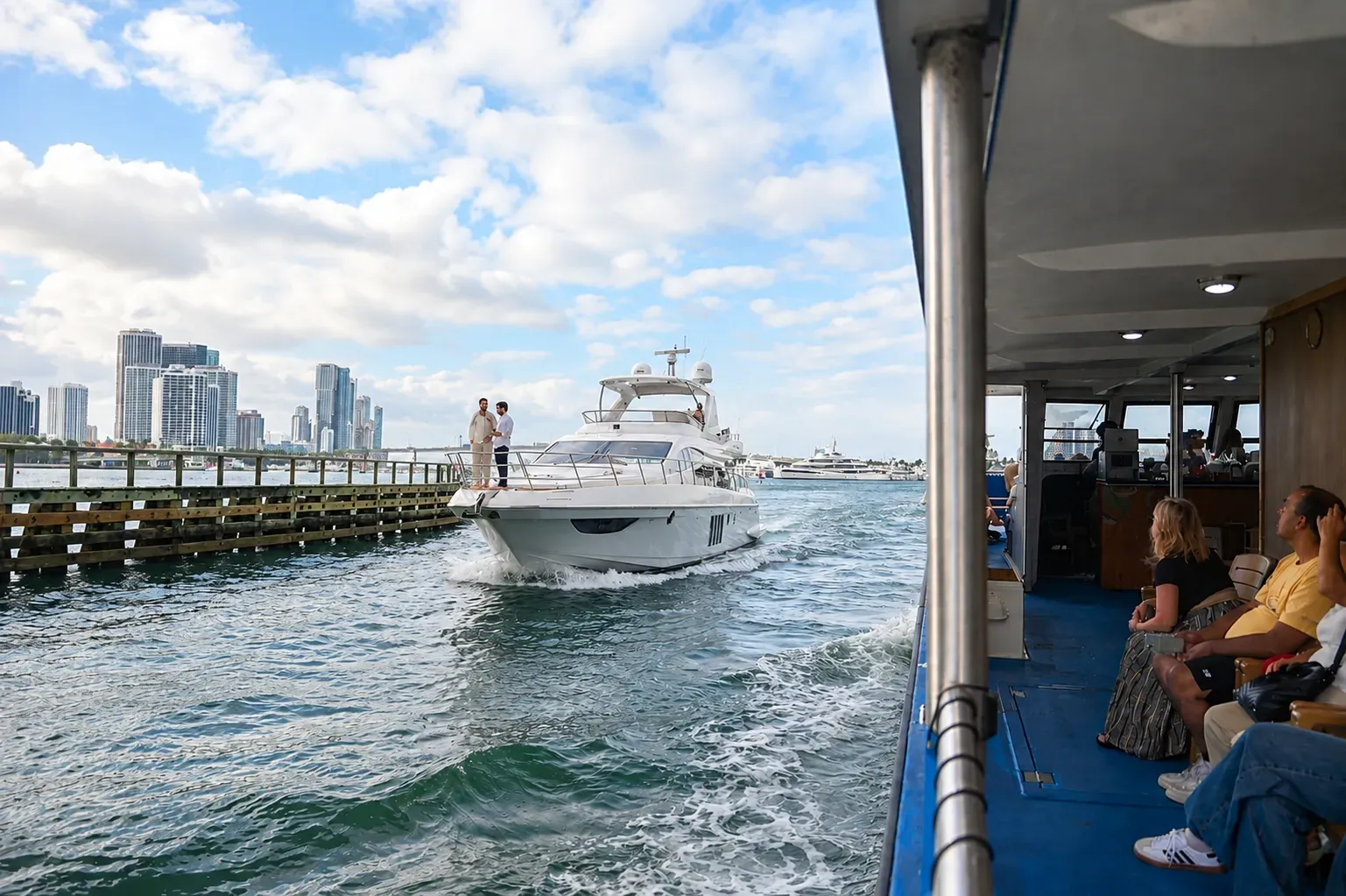
Start with the places that define the city. Walk Ocean Drive and experience its Art Deco architecture. Visit Little Havana for Cuban coffee, music, food, and Miami culture. Spend time at Bayside Marketplace. Enjoy the beaches. Explore Downtown. And don't leave without seeing the city from Biscayne Bay. Miami boat tours give first-time visitors a perspective that's difficult to experience from land, with views of the Miami skyline, waterfront architecture, famous islands, and some of the places that helped shape the city.
But there's no single perfect Miami vacation.
Traveling with kids is different from coming with friends. A couple looking for sunsets will experience Miami differently from someone looking for nightlife. And an adventurous traveler might rather spend an hour on a jet ski than an afternoon at an art museum.
That's what this guide is about.
Whether you're visiting Miami for two days, five days, or a full week, we'll show you what first-time visitors should know about where to stay, getting around, beaches, sightseeing, food, weather, nightlife, family activities, the Everglades, and experiencing Miami from the water.
Because the real question isn't how many days do you need in Miami?
It's how much Miami can you experience with the time you have?
Visiting Miami for the First Time? Start Here
Here's the first thing to understand about Miami: patience goes a long way. This is a major metropolitan city filled with locals, tourists, traffic, different languages, and people from just about everywhere in the world. Miami moves fast, but getting around it doesn't always happen fast.
Don't let that frustrate you.
You're going to hear plenty of Spanish. You're going to run into traffic. Parking may take longer than expected. A thunderstorm might appear out of nowhere and disappear just as quickly. That's all part of being in Miami.
The smartest way to enjoy your first trip is to leave some breathing room in your plans. Don't schedule an activity in Downtown and assume you'll be sitting on South Beach 15 minutes later. As we like to say around here, nothing in Miami is 15 minutes away unless you're crossing the street.
More importantly, come ready to enjoy the city for what it is. Miami was built by hardworking families and people from all over the world. That melting pot is part of the food, music, neighborhoods, language, businesses, and energy you'll experience everywhere you go.
You don't have to understand Miami before you arrive.
Just give yourself enough time to experience it once you're here.
Miami Beach vs. South Beach: What's the Difference?
Miami Beach is the city. South Beach is the famous southern part of it. For a first-time visitor, though, the real difference isn't geography. It's who you're traveling with and the kind of vacation you want.
South Beach is Miami turned up.
This is where Ocean Drive, the Art Deco District, nightlife, restaurants, beach crowds, and that famous Miami energy all come together. During the day, Ocean Drive is one of the city's most recognizable streets. At night, the sidewalks can feel like a runway—people dress to impress, restaurants fill up, and South Beach takes on an entirely different personality.
Travel north along Collins Avenue and Miami Beach starts changing.
Mid-Beach and North Beach generally offer a more relaxed atmosphere. You're still on the same barrier island with access to beautiful beaches, but you're farther away from the nonstop pace of South Beach. For families, travelers with children, or anyone who wants mornings on the sand without nightlife outside the hotel, heading farther north can make a lot of sense.
Keep going and you'll reach Surfside and Bal Harbour before eventually reaching Sunny Isles Beach farther north.
So, South Beach or Miami Beach?
If you're coming with friends, looking for nightlife, or want Ocean Drive outside your door, South Beach is hard to beat.
If you're traveling with family or want a quieter beach vacation, look farther north.
And if you're still undecided, remember the rule we use when talking about Miami:
Don't choose an area because everybody says you have to stay there. Choose it based on who you're traveling with.
Where Should First-Time Visitors Stay in Miami?
If this is your first trip to Miami and you want one area that gives you access to a little bit of everything, Downtown Miami is hard to beat.
You are close to Bayside Marketplace, Biscayne Bay, museums, waterfront restaurants, sightseeing attractions, public transportation, and some of the best skyline views in the city. Downtown also makes it easier to move toward Brickell, Miami Beach, Little Havana, Wynwood, and other popular areas without starting every day from the edge of the city.
For a deeper look at what is around the waterfront, check out our Downtown Miami Waterfront: The Complete Local Guide.
Another advantage is transportation. Brightline connects Downtown Miami with Fort Lauderdale, West Palm Beach, and other South Florida destinations, while rideshare service is usually easy to find throughout the area.
Want the Beach Outside Your Hotel?
Then Miami Beach makes more sense.
South Beach puts you close to Ocean Drive, nightlife, restaurants, and the most famous stretch of Miami Beach. Mid-Beach and North Beach offer a quieter version of the same coastline while keeping the ocean only steps away.
The decision really comes down to location versus lifestyle.
Downtown gives you a central base for exploring different parts of Miami.
Miami Beach gives you the beach experience from the moment you walk outside.
One thing both areas have in common: parking is rarely the part of Miami anyone falls in love with. If you're flying in for a short stay, don't automatically assume you need a rental car. Between rideshare, public transportation, and walkable pockets of the city, you may spend less time worrying about garages and more time actually enjoying Miami.
For a first visit, though, if you asked us to choose just one base?
Downtown Miami gets our vote.
Ocean Drive: Your First Taste of Miami
No first visit to Miami feels complete without seeing Ocean Drive at least once.
Running alongside South Beach, Ocean Drive is where Miami's postcard image becomes real: palm trees, pastel-colored Art Deco buildings, sidewalk restaurants, classic hotels, music, exotic cars, and the Atlantic Ocean only steps away.
But Ocean Drive is more than a famous street.
Its Art Deco architecture is part of Miami Beach's history, and the surrounding district contains one of the world's best-known collections of Art Deco buildings. Decades of movies, television shows, music videos, and photographs have helped turn this stretch of South Beach into an international symbol of Miami.
Walk It—Don't Just Drive Through It
If it's your first time here, get out of the car.
Walk the sidewalks. Look at the architecture. Cross over to the beach. Stop for something to eat or drink if the atmosphere catches your attention. Ocean Drive isn't something you need to rush through just to say you've seen it.
And yes, some restaurants and drinks along this famous stretch can get expensive.
That's part of visiting one of Miami's most recognizable tourist areas. Check the menu and prices before ordering, read recent reviews, and then decide whether the experience is worth it to you.
During the day, Ocean Drive shows off the colors and details of its Art Deco buildings. After dark, the neon comes on, restaurants fill up, and the entire street changes character.
You can see Ocean Drive in a photograph a thousand times. Walking it for the first time is different.
Why Bayside Marketplace Belongs on Your First Miami Trip
If you're planning your first visit to Miami, put Bayside Marketplace on the list.
Not because it's simply another place to shop. Bayside sits directly on the Downtown Miami waterfront, and few places pack this many different Miami experiences into one location.
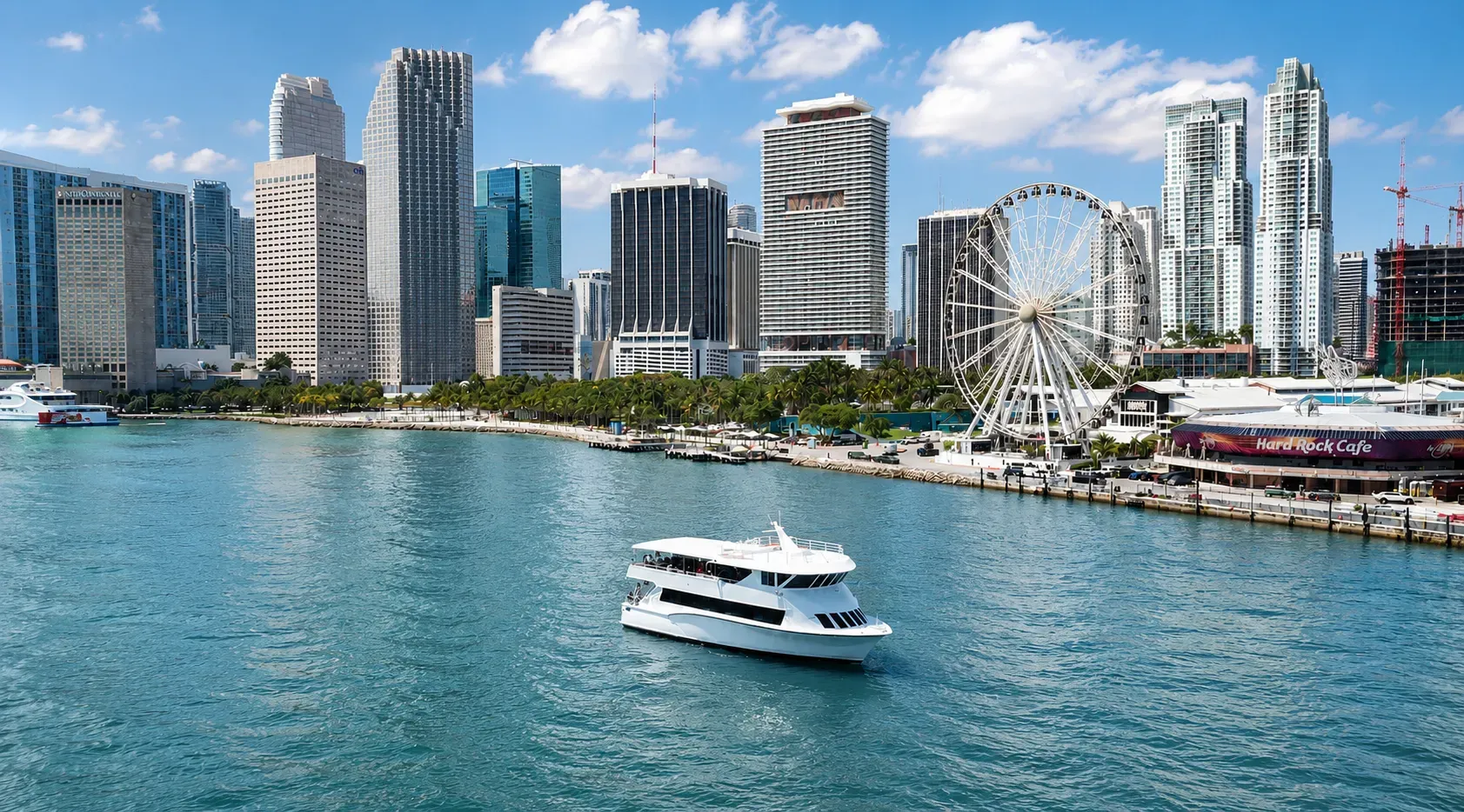
You can grab lunch overlooking Biscayne Bay, walk along the marina, shop, listen to live entertainment, ride the observation wheel, take the kids to an attraction, or head straight onto the water for everything from sightseeing cruises to speedboat rides.
And Bayside keeps changing.
New restaurants and attractions continue to arrive, which is why this isn't one of those places you visit once and assume you've seen forever. As we like to say, Bayside doesn't grow by the year—it grows by the month.
Why Bayside Works for Almost Any Miami Itinerary
If you're visiting Miami as a family, you can easily spend a few hours here without everyone needing to do the same activity.
If you're visiting Miami as a couple, the waterfront, restaurants, observation wheel, and Biscayne Bay make it an easy stop before continuing into Downtown or heading onto the water.
And if your time in Miami is extremely limited, Bayside becomes even more valuable. You're standing between Downtown Miami and Biscayne Bay with dining, entertainment, attractions, and sightseeing experiences all within a relatively compact waterfront area.
For a deeper look at what's available around the marina, see our Popular Miami Sightseeing Tours from Bayside | Local Guide.
We've had people ask us what they should do if they only have a few hours in Miami.
Our answer doesn't take long:
Go to Bayside.
Why First-Time Visitors Need to See Miami From the Water
You can walk Ocean Drive, explore Downtown, cross the causeways, and spend an entire day on Miami Beach.
But there's one perspective of Miami that land simply can't give you.
Get out on Biscayne Bay.
Miami and the water are like a marriage—and they're never getting divorced. Biscayne Bay, the Miami River, the Atlantic Ocean, the islands, beaches, ports, and waterfront communities aren't just scenery. Water is part of Miami's identity and played an important role in how the city developed. The full story goes much deeper in How Biscayne Bay Shaped Miami.
Step Back and Look at the Miami Skyline
One of the problems with exploring Downtown Miami on foot is that you're standing underneath the architecture you're trying to appreciate.
Biscayne Bay gives you distance.
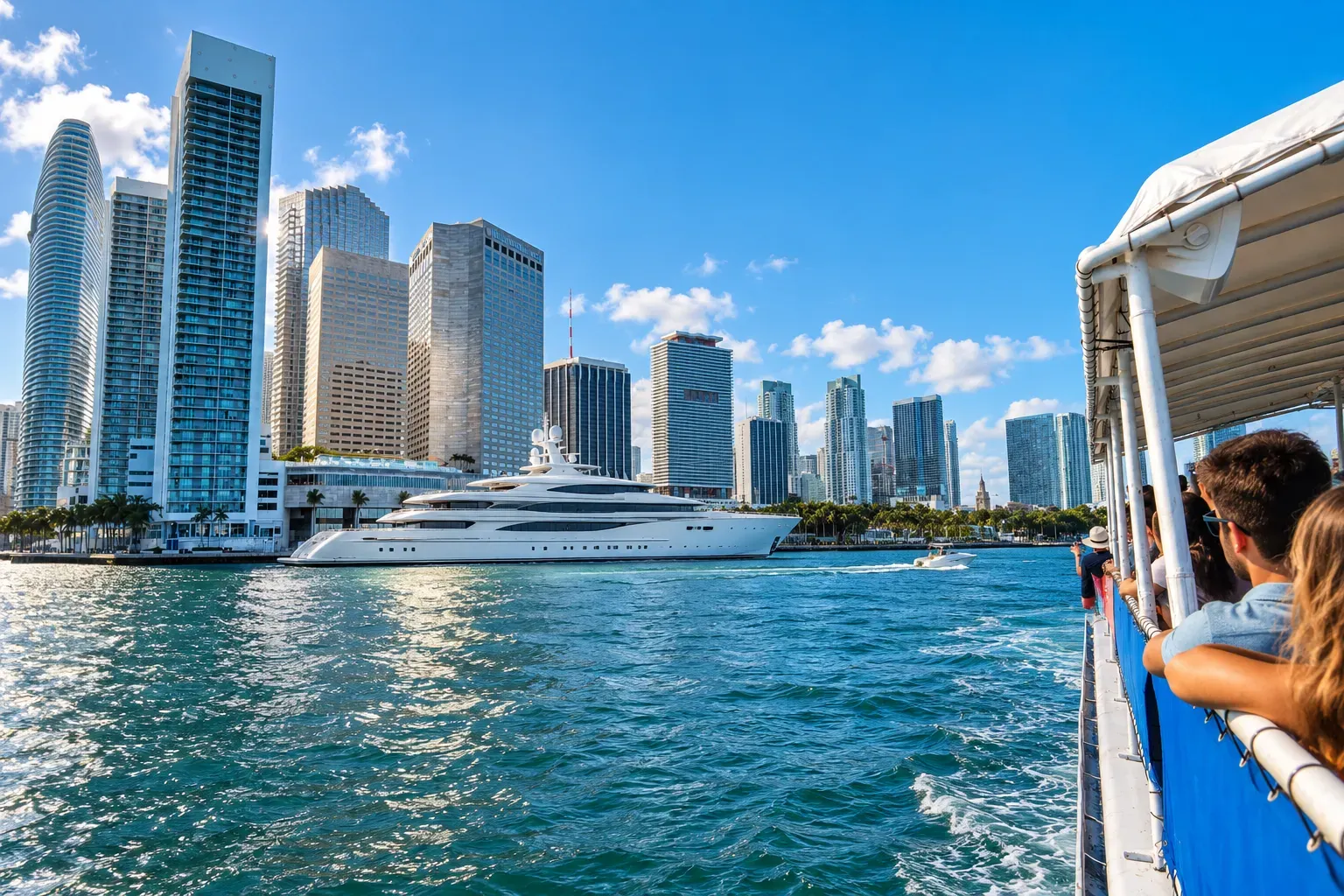
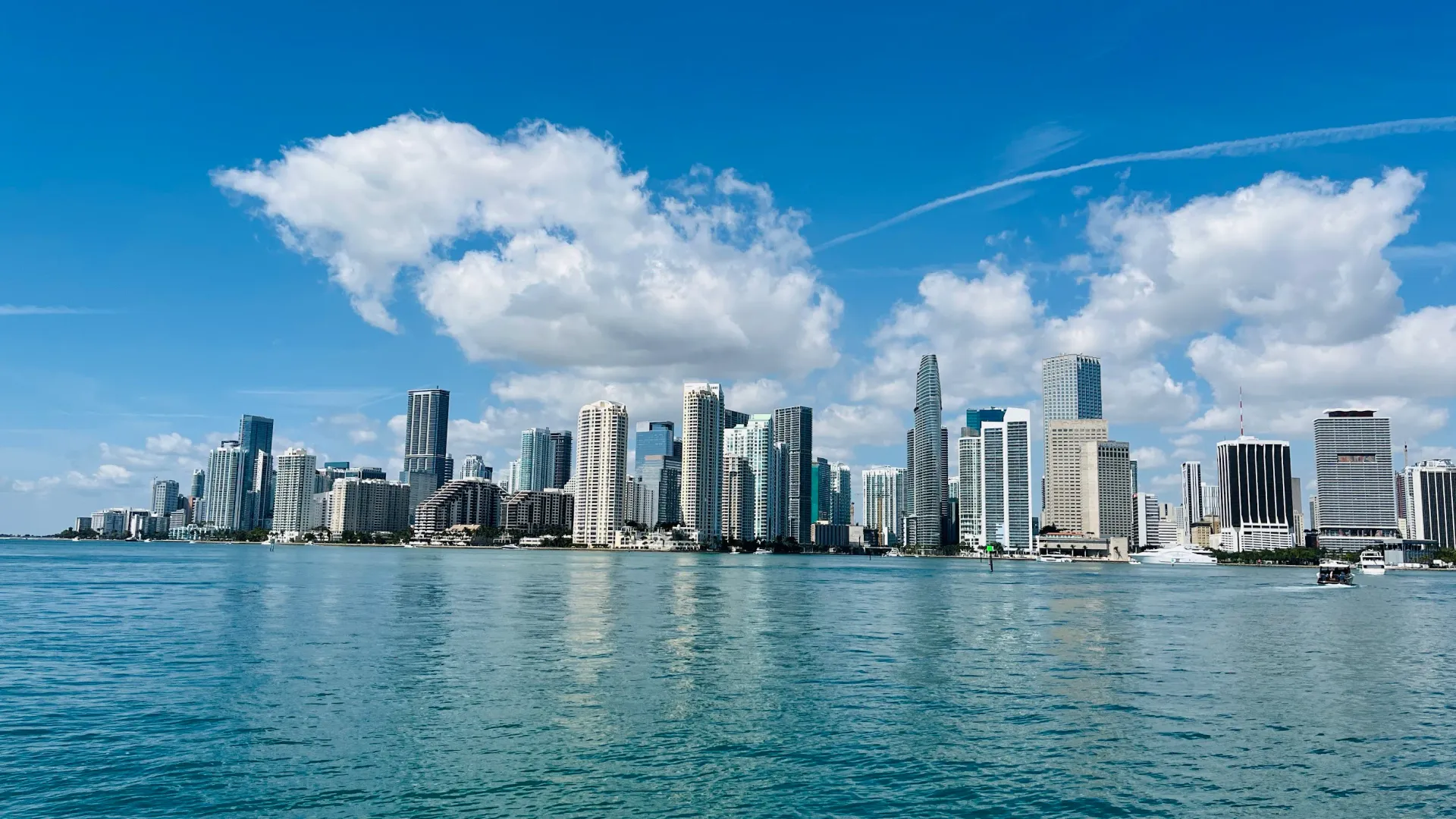
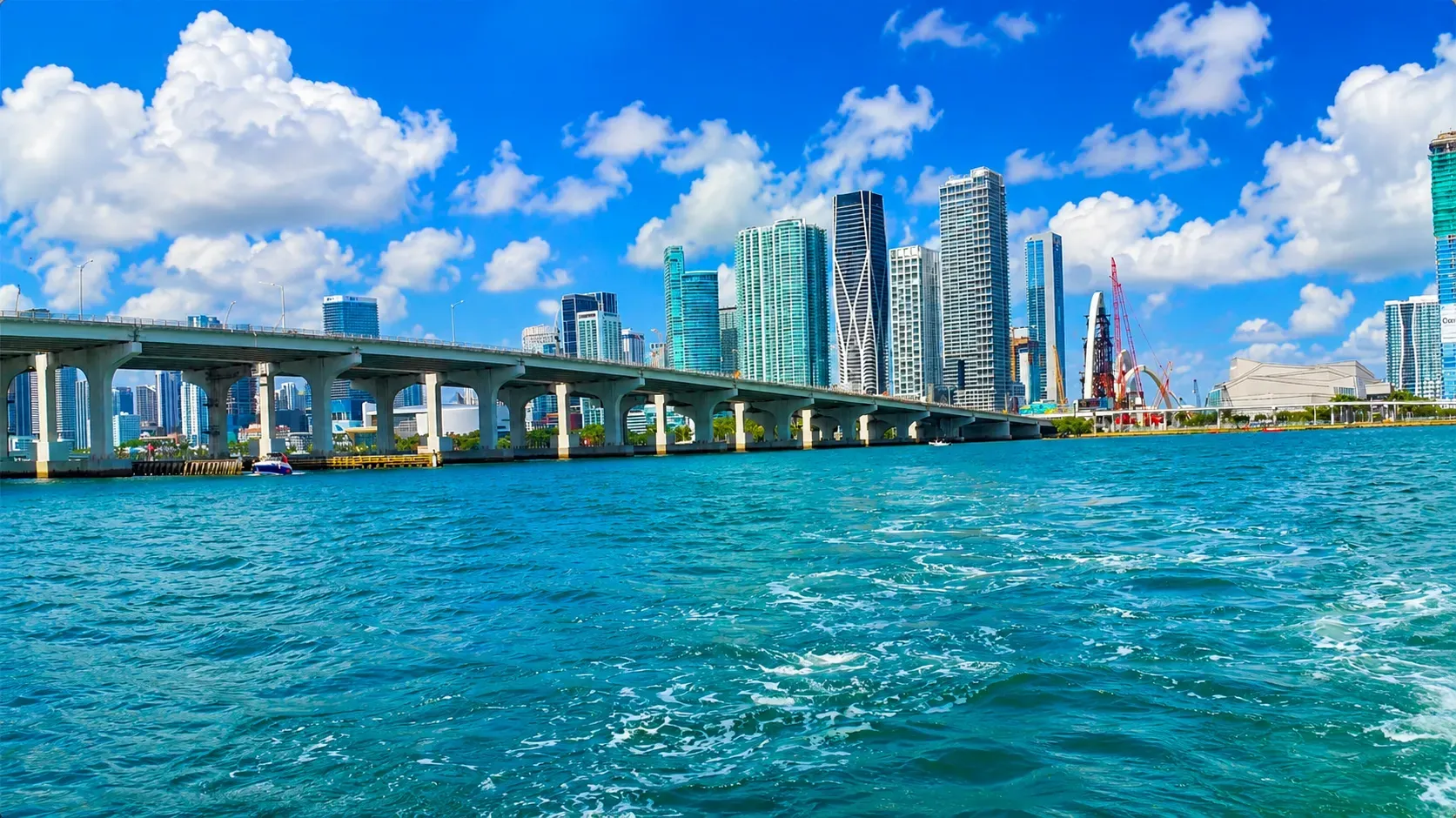
From the water, Downtown and Brickell begin to form one enormous waterfront skyline. Glass towers rise behind the bay, bridges stretch between neighborhoods and islands, and the architecture finally becomes part of a complete view instead of individual buildings towering above you.
That's when you understand why the Miami skyline gets so much attention.
There's Another Miami Hidden Between the Causeways
Look away from the skyline and you'll start seeing places that are difficult to truly appreciate from a car.
Star Island is one of them. The island's waterfront estates face Biscayne Bay, meaning the perspective visitors recognize from photographs and sightseeing cruises is largely a water-facing one. There's also much more history behind the island than celebrity mansions, which we cover in our Star Island Miami guide.
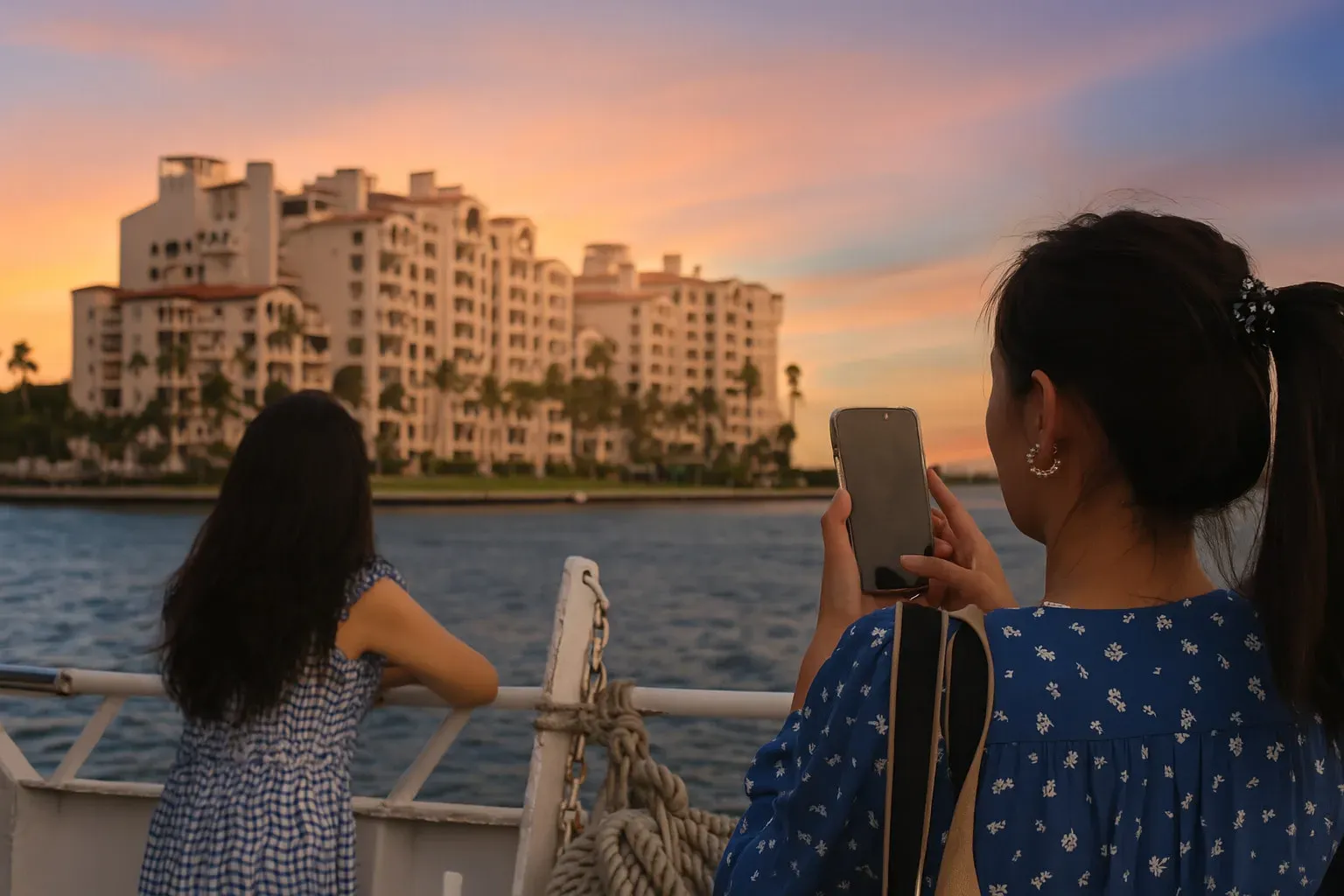
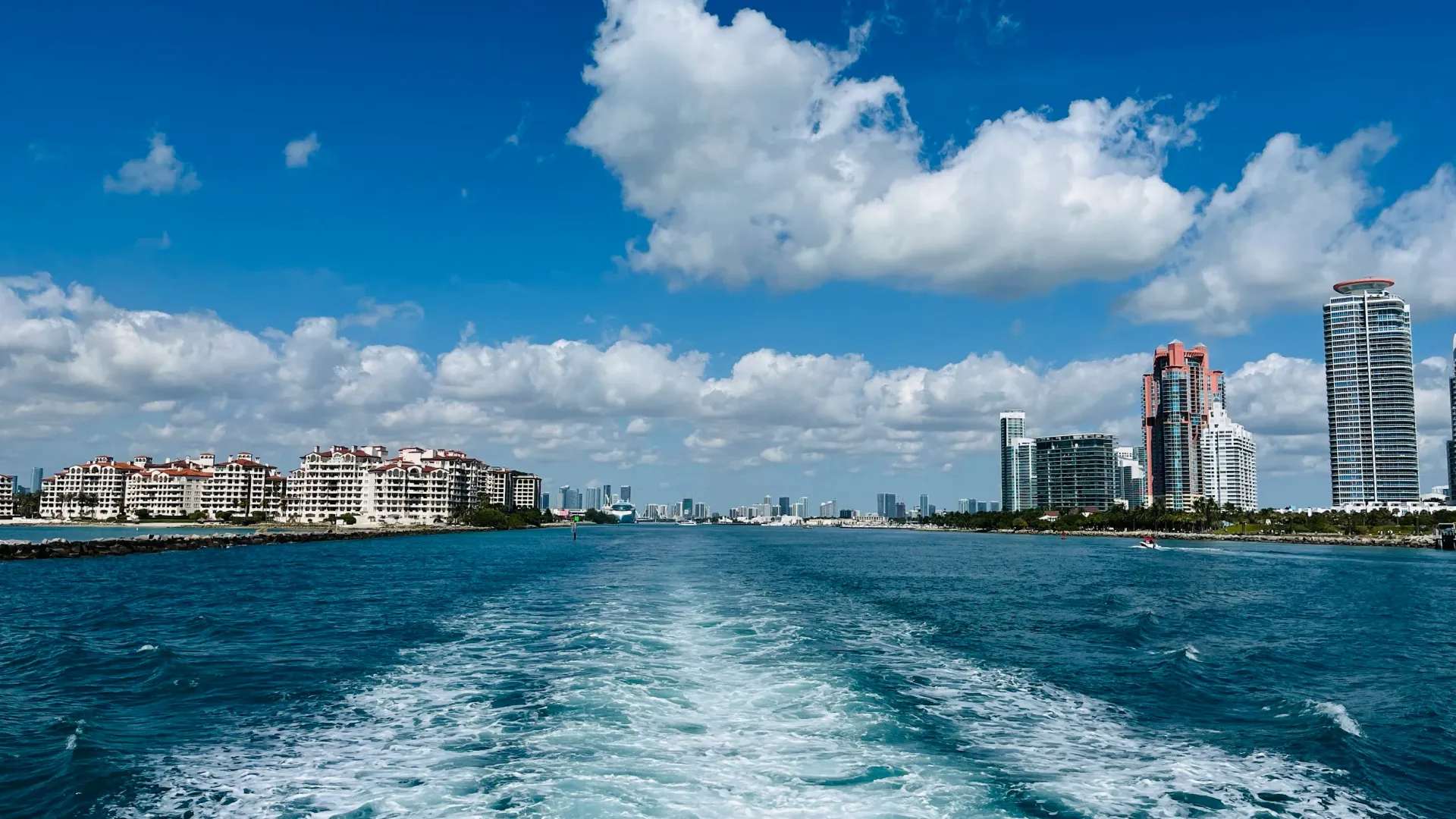
Then there's Fisher Island, positioned near Government Cut between Miami Beach and the Atlantic. Most visitors aren't simply driving onto Fisher Island, but being on the water gives you a perspective of this famously private community that you won't get while walking around Downtown or South Beach. You can explore that story further in the Fisher Island Miami guide.
Continue looking around the bay and Miami keeps revealing itself: Palm Island, Hibiscus Island, the Venetian Islands, Monument Island, Miami Beach, causeways, marinas, waterfront homes, and boats moving in every direction.
Even PortMiami Tells Part of the Story
For many visitors, PortMiami is simply where the cruise ships are.
It's much more than that.
The port has played an important role in Miami's growth and connection with the rest of the world. Seeing its massive ships and waterfront infrastructure from Biscayne Bay gives you a sense of scale that's difficult to understand from land. We tell that story in How PortMiami Helped Build Modern Miami.
And that's what makes experiencing Miami from the water different.
You're not looking at one attraction.
You're looking at the skyline, islands, architecture, neighborhoods, port, bridges, boats, and history of Miami sharing the same body of water.
For travelers visiting Miami for the first time, that's a perspective worth making room for.
On land, you experience Miami one place at a time. From Biscayne Bay, you get to see how Miami fits together.
What Is the Best Time to See Miami From the Water?
Ask three people the best time to see Miami from Biscayne Bay and you may get three different answers.
That's because daytime, sunset, and nighttime don't compete with each other. They show you three different versions of Miami.
Daytime: See Miami in Full Detail
During the day, you get the clearest look at what surrounds Biscayne Bay.
The skyline, waterfront architecture, bridges, islands, yachts, celebrity homes, and colors of the water are easier to appreciate when everything is illuminated by daylight.
It's also when you may notice more of Biscayne Bay's natural side. Bottlenose dolphins live in these waters, pelicans are common around the bay, and the larger ecosystem supports rays, manatees, sea turtles, tropical fish, and other marine life.
Wildlife sightings are never guaranteed.
But that's part of the fun—you never really know what Biscayne Bay is going to show you.
Sunset: Watch Miami Change in Front of You
Sunset is different because the experience doesn't stay the same for very long.
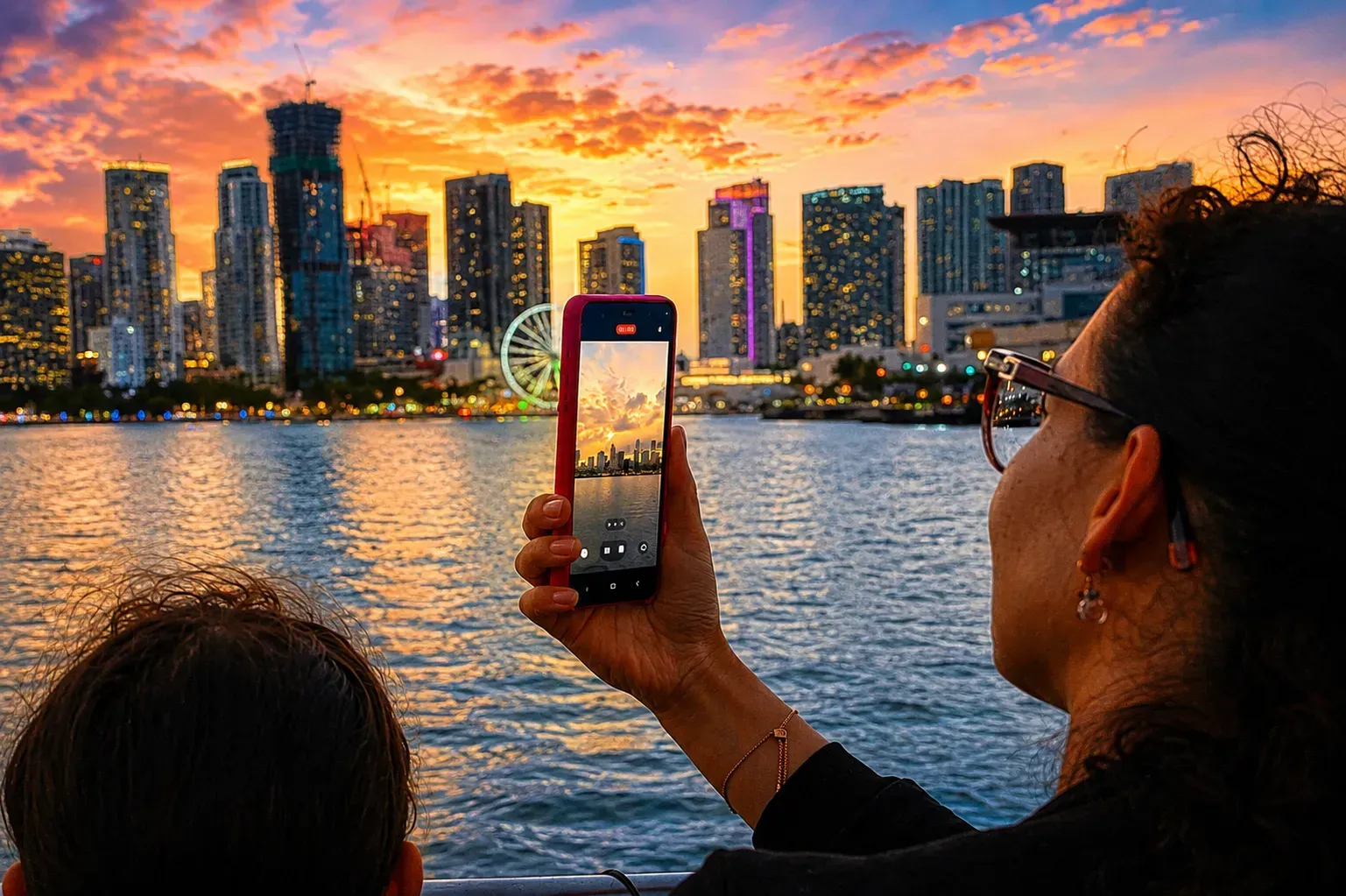
You may leave while Miami is still completely visible in daylight. Then the sunlight begins softening, the skyline takes on warmer tones, and the sky starts changing above Biscayne Bay.
Before long, Downtown and Brickell begin turning on their lights.
That's what makes a Miami Sunset Cruise especially interesting for someone planning a first trip to Miami. If the timing works in your favor, you aren't experiencing only a sunset.
You're seeing daytime Miami slowly become nighttime Miami.
Nighttime: This Is When the Skyline Comes Alive
Miami after dark is its own experience.
During the day, you see the architecture.
At night, the architecture becomes the show.
Downtown and Brickell illuminate the waterfront, building lights reflect across Biscayne Bay, bridges glow, and the skyline that looked impressive a few hours earlier suddenly feels completely different.
If city lights, atmosphere, and nighttime Miami are what you're after, a Miami Night Cruise makes more sense than choosing a daytime departure simply because somebody told you daytime was better.
You can also go deeper into the experience in our Miami Skyline Cruises at Night guide.
So, Day, Sunset, or Night?
Here's the simple answer:
Choose daytime if seeing the most detail matters to you.
Choose sunset if you want to experience Miami changing from day toward night.
Choose nighttime if you want the lights, reflections, skyline, and atmosphere.
Still comparing your options? Our Miami Sightseeing Cruise: Best Time of Day Guide breaks down each experience in more detail.
There is no wrong answer here.
The mistake would be coming to Miami and never seeing what the city looks like from Biscayne Bay at all.
Visiting Miami With Family? There's More to Do Than the Beach
Miami has a reputation for nightlife, but don't let that fool you. Visiting Miami as a family can be one of the easiest ways to experience the city, because you're not limited to one type of attraction.
Sure, start with the beach.
But don't stop there.
Downtown alone gives families access to museums, parks, Biscayne Bay, Bayside Marketplace, sightseeing, and attractions that can fill an entire day without constantly crossing Miami-Dade County.
The Pérez Art Museum Miami brings contemporary art to the waterfront, while the nearby Frost Museum of Science gives kids a completely different experience with science, an aquarium, and a planetarium.
Head toward Coral Gables and you'll find the historic Venetian Pool, a former coral-rock quarry transformed into one of Miami's most unusual swimming spots.
And then there's the outdoors.
Miami gives families beaches, parks, Biscayne Bay, wildlife, and the Everglades close enough to the city that you can completely change the type of day you're having without leaving South Florida.
Sightseeing Can Be Easier With Kids Than You Think
Here's something parents sometimes overlook: you don't have to walk children through every neighborhood to show them Miami.
A sightseeing experience can cover much more ground without turning the day into a marathon.
You can see the city by land, get onto Biscayne Bay, spot landmarks along the way, and let the kids experience Miami instead of spending half the vacation getting in and out of a car.
And if getting on the water is part of the plan, our Family-Friendly Boat Tours in Miami guide goes deeper into what parents should know before taking children on Biscayne Bay.
The bigger point is simple:
Miami isn't an adults-only playground.
Come with the kids and you'll discover a completely different side of the city—one filled with museums, wildlife, beaches, water, history, outdoor activities, and enough variety that the adults don't have to sacrifice their vacation for the children to enjoy theirs.
If It's Your First Time in Miami, You Need to See More Than the Beach
If it's your first time in Miami, here's something you should understand early:
Miami Beach is famous. Miami is bigger.
Cross the causeway and the city starts changing fast. The architecture changes. The food changes. The music changes. Even the language you hear walking down the street can change from one neighborhood to the next.
That's the Miami first-time visitors sometimes miss.
Little Havana: This Is Part of the Real Miami
Little Havana isn't a neighborhood you visit because a travel website told you to take a picture there.
Go because Calle Ocho tells part of Miami's story.
Walk the street and you'll hear Spanish almost everywhere. Stop for a cafecito. Try a croqueta. Listen to the music coming from restaurants and businesses. Watch locals playing dominoes at Domino Park and take a little time to understand why Cuban culture has had such an enormous influence on Miami.
We sometimes describe Calle Ocho as Miami's Latin Ocean Drive.
Not because the two streets are the same—they're definitely not—but because both have become streets where the culture surrounding them is part of the attraction.
And here's the best part:
You don't need to spend a fortune to experience Little Havana.
Sometimes you just need to walk, look, listen, and have a Cuban coffee.
Wynwood: Miami Reinvented Itself Here
Then you have Wynwood.
If you're into art, go.
The murals, galleries, restaurants, street art, and creative energy have helped transform an area that looked completely different years ago into one of Miami's best-known cultural districts.
But we're also going to tell you something most “first time in Miami” lists won't:
If art isn't your thing, you don't have to force Wynwood into your vacation.
That's the whole point of this guide.
We're not trying to give you 47 attractions and tell you they're all “must-see.”
We're helping you figure out your Miami.
The Fastest Way to Understand Miami? See It by Land
If your trip is short, moving between South Beach, Wynwood, Little Havana, Downtown, and the waterfront on your own can consume a surprising amount of time.
That's where Miami Tours start making sense.
Instead of spending your first day figuring out where everything is, a sightseeing tour can give you the layout of the city, introduce you to several neighborhoods, and help you decide where you want to return later.
Our Miami 5-in-1 City Tour is built around exactly that idea, connecting major Miami experiences such as South Beach, Star Island, Wynwood, Little Havana, and a skyline photo stop in one 3.5-hour tour.
For someone planning their first visit to Miami, that's valuable.
You aren't just collecting photographs.
You're starting to understand why one city can feel completely different every few miles.
Because your first time in Miami shouldn't end with:
“I went to South Beach.”
It should end with:
“Now I understand why Miami is Miami.”
First Time in Miami? Make Room for the Florida Everglades
If you're visiting Miami for the first time, it's easy to spend your entire vacation surrounded by beaches, skyscrapers, restaurants, boats, and traffic.
But drive west from the city and South Florida starts changing in front of you.
The buildings disappear. The landscape opens up. And suddenly you're looking across one of the most extraordinary natural environments in the country.
Welcome to the Florida Everglades.
Everglades National Park protects the largest subtropical wilderness in North America and an ecosystem so significant that it carries World Heritage, International Biosphere Reserve, and Wetland of International Importance designations.
That's a completely different experience from the Miami you've been exploring.
From Ocean Drive to the River of Grass
Think about what makes this destination so unusual.
You can wake up near South Beach or Downtown Miami, spend the morning surrounded by one of America's most energetic metropolitan areas, and later find yourself looking across sawgrass wetlands where alligators, wading birds, turtles, fish, and other wildlife have lived long before Miami had a skyline.
That's why we created First Time in Miami? The Complete Guide for First-Time Visitors to go beyond the obvious attractions.
Your first Miami vacation shouldn't only introduce you to what people built.
It should introduce you to South Florida itself.
Is an Everglades Airboat Ride Worth It?
For many visitors, an airboat ride is their introduction to the Everglades.
And it's nothing like being on Biscayne Bay.
You're trading skyscrapers and waterfront mansions for sawgrass, open wetlands, wildlife, and an environment that feels incredibly far removed from the city you left behind.
If you want to experience that side of South Florida without figuring out the entire trip yourself, the Miami Everglades Tour gives you a straightforward way to add an Everglades experience to your Miami itinerary.
What If You Only Have a Few Days?
This is where priorities matter.
If you've got several days in Miami, make room for the Everglades.
If you're working with only two days, you may have to choose between experiences instead of trying to squeeze everything into one exhausting schedule.
And if you're visiting during South Florida's wetter months, bring insect repellent. The National Park Service specifically warns that the wet season brings heat, humidity, rain, and increased mosquito activity.
Miami can show you incredible things built by people.
The Everglades shows you what Mother Nature built first.
What Should You Try on Your First Trip to Miami?
If you're visiting Miami for the first time, don't ask us what you have to eat.
Ask us what you have to try.
There's a difference.
Miami is a melting pot, and you can taste that almost everywhere you go. Cuban coffee, croquetas, Caribbean flavors, Latin American food, fresh seafood, neighborhood cafeterias, fine dining, and waterfront restaurants are all part of experiencing the city.
You could spend a month here, eat somewhere different every day, and still leave with restaurants you never got around to trying.
So where do you start?
With a tiny cup of Cuban coffee.
In Miami, 3:05 Means Cafecito Time
Cuban coffee isn't something Miami simply serves.
It's part of the culture.
Find a ventanita—one of Miami's walk-up Cuban coffee windows—order a cafecito, and don't let that little cup fool you. Miami managed to pack plenty of personality and caffeine into a few sips.
And here's something people planning their first visit to Miami may not know:
At 3:05 p.m., it's cafecito time.
Why 3:05?
- Because 305 is Miami.
The tradition grew from the local 305 Cafecito movement, which encouraged Miamians to share a coffee break at 3:05. In 2013, Miami Mayor Tomás Regalado presented a proclamation recognizing 3:05 p.m. as the city's official coffee break.
So if you're exploring Miami and look at your phone at exactly 3:05?
You know what time it is.
Cafecito time.
And grab a croqueta while you're there.
Looking for a Cuban Sandwich? Go to Little Havana
Here's one piece of food advice we'll give anyone visiting Miami for the first time:
Don't make Ocean Drive your first choice for an authentic Cuban sandwich.
No disrespect to Ocean Drive. Go there for the Art Deco architecture, South Beach atmosphere, people-watching, restaurants, and the experience of walking one of Miami's most famous streets.
But if Cuban food is the mission?
Go to Little Havana.
Walk Calle Ocho. Read the recent restaurant reviews. Find a place that catches your attention. Order the Cuban sandwich, try the croquetas, and maybe have another cafecito if the first one didn't have you moving fast enough.
You're not only trying the food.
You're experiencing it in a neighborhood where Cuban culture helped shape Miami.
Joe's Stone Crab: Miami History You Can Eat
Then there's seafood.
And it's difficult to talk about iconic Miami restaurants without mentioning Joe's Stone Crab.
Joe Weiss opened a small lunch counter on Miami Beach in 1913—before Miami Beach was even incorporated as a city. Stone crabs became part of Joe's story later, after they began serving them in the early 1920s.
Think about that.
Joe's was feeding people on Miami Beach before Miami Beach officially became a city.
That's why Joe's isn't simply about ordering stone crab.
It's a piece of Miami Beach history you can actually sit down and taste.
And that's what we're looking for throughout this guide—not simply where can you eat?, but where can food become part of experiencing Miami?
At the Rusty Pelican, the Miami Skyline Joins You for Dinner
Then flip the experience around.
Head toward Key Biscayne and look back across Biscayne Bay toward the city.
That's part of what makes the Rusty Pelican different. The waterfront restaurant sits at Rickenbacker Marina and is known specifically for its views back toward Miami's city skyline.
You're eating dinner while Downtown and Brickell become the backdrop.
The Miami Skyline becomes part of the table.
And if you've already walked underneath those towers in Downtown, seeing them from across Biscayne Bay gives you another perspective entirely.
You're no longer looking up at individual buildings.
You're looking back at Miami.
That's why we think at least one waterfront meal belongs on a first Miami vacation. It doesn't necessarily have to be here, and every dinner doesn't need a million-dollar view.
But at least once, sit somewhere where the water, boats, architecture, and skyline become part of the meal.
Don't Spend Your Vacation Chasing Somebody Else's “Best Restaurant”
Here's our food advice for anyone planning their first trip to Miami:
Read recent reviews. Check the menu. Look at the prices before ordering. Make reservations when they're necessary.
And then stop overthinking it.
- Have the cafecito.
- Eat the croquetas.
- Find your Cuban sandwich.
- Try the seafood.
- Have dinner overlooking Biscayne Bay.
And if you walk past some little restaurant you've never heard of and whatever they're cooking smells incredible?
Go inside.
Miami doesn't have one food that defines it.
It has cultures from around the world that ended up sharing the same city—and sometimes the same table.
Your first time in Miami should include tasting a few of them.
Getting Around Miami Without Losing Your Mind
If you're planning your first visit to Miami, here's something you should know before you start putting activities on a calendar:
Give yourself time.
Miami is a major metropolitan city. Millions of people live, work, and vacation across South Florida, and everybody seems to have somewhere to be at the same time.
We have a saying around here:
Nothing in Miami is 15 minutes away unless you're crossing the street.
Okay, maybe that's a little dramatic.
But spend one afternoon in Miami traffic and you'll understand exactly what we mean.
Do You Really Need to Rent a Car in Miami?
Not always.
If you're flying into Miami and staying around Downtown, Brickell, South Beach, or Miami Beach, using Uber or Lyft can sometimes be easier than renting a car.
Rideshare is part of everyday life here. In busy visitor areas, you're generally not dealing with the same problem of finding a garage, paying for parking, walking from the garage, remembering where you left the car, and then repeating the whole process at your next stop.
A rental car makes more sense when your itinerary starts spreading out.
Planning longer trips outside the main tourism areas? Exploring farther south? Staying somewhere removed from the major visitor districts?
Then having your own car may be worth it.
But don't rent one automatically because you assume Miami requires a car.
Downtown Miami Has a Secret Weapon: Metromover
If you're staying Downtown or around Brickell, learn how to use Metromover.
It's free.
Miami-Dade's elevated Metromover serves 21 stations across Downtown, Brickell, and the Omni area, with convenient access to places such as Bayside Marketplace, Kaseya Center, and other Downtown destinations.
And yes, we said free.
In a city where your vacation budget can disappear pretty quickly, we'll take free transportation whenever Miami wants to give it to us.
Miami Beach also operates a free trolley system, giving visitors another option for moving around the beach without getting behind the wheel every time they want to go somewhere.
Parking in Miami? Read This Before You Drive Anywhere
Here's where things get interesting.
Don't plan your vacation around finding free parking.
Especially around Downtown Miami and Miami Beach.
There are municipal garages, private garages, parking lots, and metered street spaces, but availability and prices vary depending on exactly where you are.
For example, standard Miami Beach visitor meter rates currently vary by zone, with on-street parking in South Beach and the Entertainment District normally listed at $4 per hour.
But here's the part that matters more than the price:
Know where you're going to park before you get there.
If you have a boat departure, dinner reservation, tour, museum ticket, or anything else with a scheduled time, don't arrive in the neighborhood at the last minute and then start looking for somewhere to leave the car.
That's how a parking problem becomes a vacation problem.
Don't Trust the Drive Time Too Much
Your map might say 22 minutes.
Miami might have other plans.
Traffic happens. Accidents happen. Major events happen. A Heat game can change traffic around Downtown. A busy weekend can change Miami Beach. And sometimes there's no dramatic explanation at all.
There's just traffic.
That's why one of the smartest things you can do on your first time in Miami is build breathing room between activities.
If something starts at 2:00 p.m., don't plan your entire day around arriving at 1:59.
- Get there early.
- Walk around.
- Grab something to drink.
- Look at the water.
You're in Miami. Being early isn't exactly the worst problem to have.
So, What's the Easiest Way to Get Around Miami?
For a short vacation, we'd keep it simple.
- Uber or Lyft can be convenient when you're moving between major visitor areas.
- Metromover is excellent when you're exploring Downtown and Brickell.
- Miami Beach's trolley can help when you're staying on the beach.
- A rental car becomes more useful when you're planning to explore farther beyond Miami's central tourism areas.
And walking is great once you're inside neighborhoods where the attractions you're visiting are close together.
Don't spend your vacation fighting Miami.
Work with it.
Leave earlier than you think you need to. Know where you're going. Figure out the parking before you arrive. And when traffic inevitably slows down?
Remember the advice we gave you at the beginning of this guide:
- Come to Miami with patience.
- Traffic eventually moves.
Your vacation shouldn't be spent getting mad at it.
Want a Little More Adrenaline? Experience Miami on a Jet Ski
Maybe sightseeing from a boat isn't enough for you.
Maybe you want to feel Miami.
If you're into speed, being outdoors, and a little adrenaline, riding a jet ski across Biscayne Bay can be one of those experiences you talk about long after your first trip to Miami is over.
Here's the easiest way we can describe it:
Think of a jet ski as a motorcycle on the water.
You're not sitting behind a window. You're not watching Miami pass by from a car. You're on Biscayne Bay with the water underneath you, the skyline around you, and a throttle in your hand.
And in Miami, there's something first-time visitors should understand before booking:
The jet ski matters. But the route matters just as much.
Where You Start Changes the Experience
Book a jet ski experience from Coconut Grove and you're going to experience that side of Miami.
Start somewhere else and you'll get a different route.
That's not necessarily better or worse.
It's different.
But when you start from Bayside Marketplace, you're beginning right in the middle of Miami's Downtown waterfront.
That's what makes the Miami Jet Ski Tours from Bayside interesting.
These are guided experiences, so you're not simply being handed a jet ski and told, “Good luck.”
You're heading onto Biscayne Bay with a guide and a route that turns the ride itself into part of the sightseeing experience.
Then You Get Toward Fisher Island
This is where the ride starts showing you why the starting point matters.
Head toward the sandbar near Fisher Island and look east.
There's Fisher Island.
For most visitors, that's about as close as they're going to get without actually having access to the island or arriving by ferry, yacht, or another authorized form of transportation.
Now turn your head west.
Look at Miami.
Downtown and Brickell rise across Biscayne Bay in the distance.
That's the moment when the experience stops being only about riding a jet ski.
You've got one of Miami's most exclusive islands on one side and one of America's most recognizable waterfront cities on the other.
And you're sitting right in the middle of it.
This Is Sightseeing—Just With a Throttle
That's what people sometimes misunderstand about jet skiing in Miami.
Yes, it's about speed.
Yes, it's an adrenaline rush.
And yes, you're probably going to get wet.
But you're also sightseeing.
You're seeing Biscayne Bay from water level. You're looking back toward Downtown. You're passing through an environment filled with boats, islands, waterfront architecture, marinas, and views you simply don't get driving around Miami.
That's why our Miami Sightseeing from the Water: A Must-Do Experience guide is worth reading even if a traditional sightseeing cruise isn't what you're looking for. Miami's geography makes getting onto the bay part of understanding the city, whether you're cruising, boating, or riding across it on a jet ski.
Should You Jet Ski on Your First Trip to Miami?
Here's our answer:
If you're into that type of adrenaline, absolutely.
If speed and being on the water aren't your thing, don't force it. There are plenty of other ways to experience Miami.
But if you're looking at Biscayne Bay thinking, “Man, I want to get out there,” then why not?
You don't need to dedicate an entire day to it.
The Bayside jet ski experience is approximately an hour, which means you can fit it into a day that includes Downtown, Bayside, dining, sightseeing, or other activities.
One hour.
One jet ski.
Biscayne Bay underneath you.
Fisher Island on one side.
Miami on the other.
And when somebody asks what you did on your first time in Miami, you get to say:
“I went jet skiing in Miami.”
Sometimes that's reason enough.
How Many Days Do You Really Need in Miami?
People planning their first Miami vacation always want a number.
Three days?
Four days?
Five?
Here's the problem:
There is no perfect number.
If you have two days, come for two days.
If you have five, give Miami five.
And if you're lucky enough to have an entire week, now you're not just talking about Miami anymore.
You're talking about South Florida.
Two Days Can Still Be a Great Miami Trip
Don't make the mistake of thinking a short trip isn't worth taking.
You don't need to experience every neighborhood, eat at every restaurant, visit every beach, and do every attraction for Miami to be worth the flight.
With two days, be selective.
Do the things that made you want to come here in the first place.
And leave something for next time.
Because trust us:
Miami isn't going anywhere.
Three to Five Days Gives You Room to Breathe
This is where your vacation starts feeling less like a schedule.
You can wake up one morning and decide you want to spend longer at the beach.
You can sit down for lunch without checking the time every five minutes.
You can lose an hour walking around somewhere you didn't plan to visit.
And if Miami gives you one of those ten-minute thunderstorms that looks like the world is ending?
Let it rain.
Wait a few minutes.
Miami might give you a beautiful sunset afterward.
That's the advantage of having more time.
You stop chasing Miami and start enjoying it.
A Full Week Changes Everything
Now you've got options.
You can dedicate time to the Everglades without feeling like you're sacrificing half your vacation.
You can have an actual beach day.
You can spend more than one day on or around the water.
You can stay out late one night and not punish yourself with an alarm clock the next morning.
And you can start looking south toward the Florida Keys.
Key Largo, Islamorada, Marathon, the Seven Mile Bridge, and eventually Key West open up an entirely different side of Florida.
If Key West is on your bucket list but you don't want to spend the day worrying about the drive, parking, and getting yourself back to Miami, a Miami to Key West Tour can make the transportation part of the experience instead of part of the work.
Stop Counting Days
This is the part we really want first-time visitors to remember.
Someone will tell you Miami requires three days.
Someone else will tell you five.
Another person will swear you need a week.
Forget all of that.
It's not about how many days you really need in Miami.
It's about how many days you can come—and what you do with them once you're here.
Four hours?
Make them count.
A weekend?
Make it count.
Five days?
Make them count.
A full week?
Now we're talking.
Because the goal of your first time in Miami isn't to leave saying:
“I did everything.”
You won't.
The goal is to leave saying:
“I need to come back.”
First-Time Miami Mistakes That Can Ruin a Good Vacation
If you're visiting Miami for the first time, most mistakes aren't about choosing the wrong beach or missing one famous attraction.
They're usually much simpler.
- You didn't read the details.
- You didn't check the reviews.
- You didn't leave enough time.
Or you saw thunderstorms on your weather app and thought your entire Miami vacation was ruined.
Here's the advice we give our guests:
Pay attention to the details.
Don't Book an Experience Just Because It's the Cheapest
Miami has no shortage of tours, rentals, attractions, and excursions.
Compare prices. Absolutely.
But also find out who you're actually booking with.
Read recent reviews. Look beyond the star rating and pay attention to what customers say about communication, check-in, guides, equipment, cancellations, and customer service.
And here's something we recommend before booking an activity:
Call the company.
Seriously.
Ask them a question and see if somebody answers.
You can learn a lot in two minutes. Do they know the experience? Can they explain where you need to go? Can they answer a basic question without putting you through five automated menus?
Saving a few dollars doesn't feel like a deal anymore when something goes wrong and nobody picks up the phone.
Miami Isn't Cheap—Know What You're Paying For
Let's clear something up.
Miami is not one giant tourist trap.
But it is one of the world's most visited destinations, and popular tourism areas can get expensive.
Take Ocean Drive.
You see that enormous piña colada?
You want it?
Get it.
You're on vacation in South Beach. Sometimes you're paying for the drink, and sometimes you're paying for the experience of drinking it on Ocean Drive.
Just know the price before you order it.
Read the menu. Check for additional charges. Look at recent reviews.
Then make the decision yourself.
Being a tourist isn't the mistake. Being an uninformed tourist is.
Don't Be Afraid of Miami Rain
This one gets first-time visitors all the time.
You check your phone.
90% chance of rain.
Now you're thinking the beach is ruined, the boat is ruined, the afternoon is ruined, and maybe Miami itself is ruined.
Then you wake up.
Blue sky.
Welcome to Miami weather.
South Florida weather can change incredibly fast, especially during the warmer and wetter part of the year. A thunderstorm can roll through, look absolutely terrible for a short period, and then move on.
And sometimes?
That storm clears just in time to help produce an incredible sunset.
So don't panic every time you see a rain icon.
At the same time, don't ignore serious weather. Thunderstorms, lightning, tropical systems, and hurricanes are different conversations. Follow official warnings and listen to the operator when you're doing an outdoor or water activity.
If you want to understand how conditions change throughout the year—and how weather and traffic can affect time on Biscayne Bay—our Biscayne Bay Weather by Season Tips and Traffic Guide goes much deeper into planning around Miami's seasons.
The Heat Deserves More Respect Than the Rain
June, July, and August can get hot.
And we're not just talking about the number you see next to the little sun icon on your phone.
It's the humidity and heat index that get you.
You can walk outside thinking the temperature doesn't look terrible and five minutes later wonder why your shirt has become part of your body.
Drink water.
Wear sunscreen.
Take breaks.
Find some shade.
Miami isn't going anywhere. You don't need to walk around outside for six straight hours trying to defeat the sun.
Later in the year, conditions can become more comfortable, with lower humidity and some beautiful days for beaches, sightseeing, and getting out on the water.
Don't Schedule Every Minute of Your Vacation
We've already talked about Miami traffic.
We're not giving you that speech again.
This is different.
Don't turn your vacation into this:
- 9:00 breakfast.
- 10:15 attraction.
- 11:30 South Beach.
- 1:00 Little Havana.
- 2:30 Wynwood.
- 4:00 boat.
- 6:00 dinner.
Come on.
You're supposed to be on vacation.
- Leave room for the cafecito that turns into another half hour on Calle Ocho.
- Leave room for the beach that looks too good to leave.
- Leave room for the restaurant you weren't planning to try.
- Leave room for Miami to throw something at you that wasn't on your itinerary.
Some of the best parts of a first trip to Miami won't be the parts you scheduled.
Read Your Confirmation Before You Show Up
This sounds obvious.
It isn't.
If you book a tour, rental, attraction, restaurant, or excursion, read what they send you.
- Where do you check in?
- How early should you arrive?
- Do you need identification?
- Are there age restrictions?
- What's included?
- What's not included?
- What happens if you're late?
- What's the cancellation policy?
Don't discover the answers while you're standing at the wrong location five minutes before departure.
Details matter.
The Biggest Mistake? Trying to Create the Perfect Miami Vacation
There is no perfect Miami vacation.
You might hit traffic.
It might rain.
The restaurant you wanted might be booked.
You might spend way too much money on that ridiculous piña colada on Ocean Drive.
You know what?
You can still have an amazing time.
That's Miami.
It's busy. It's unpredictable. It's international. It's loud. It's colorful. And sometimes the plan you made before arriving gets completely changed once you're here.
- Do your research.
- Read the reviews.
- Ask questions.
- Give yourself time.
And then stop trying to control every minute.
Because if it's your first time in Miami, there's one piece of advice we'd put above everything else:
Come with patience. Come with a good attitude. And come ready to have a good time.
First-Time Miami FAQs
What should you do on your first time in Miami?
First-time visitors should experience Ocean Drive, Miami Beach, Little Havana, Bayside Marketplace, Downtown Miami, and Biscayne Bay. If you have additional time, add the Florida Everglades, Wynwood, or the Florida Keys. Don't try to see everything in one trip—choose a mix of beach, culture, food, sightseeing, and time on the water.
How many days do you need in Miami for the first time?
Three to five days is ideal for most first-time Miami visitors, but even two days can make a great trip. A longer stay gives you more time for the beach, neighborhoods, Biscayne Bay, and the Everglades without rushing. With a full week, you can also comfortably consider a day trip into the Florida Keys.
Where should you stay in Miami for your first visit?
Downtown Miami is our overall pick for a first visit because of its central location, attractions, transportation, waterfront, and access to other parts of the city. South Beach is the better choice if you want Ocean Drive, nightlife, restaurants, and the Atlantic Ocean within walking distance of your hotel.
What is the best time of year to visit Miami for the first time?
Miami is a year-round destination, but the experience changes by season. Winter generally brings lower humidity and comfortable outdoor weather, while summer is hotter, more humid, and wetter. Don't automatically cancel plans because rain appears in the forecast—South Florida showers and thunderstorms can develop and disappear quickly.
What is the one thing you should not miss on your first trip to Miami?
See Miami from the water at least once. Biscayne Bay gives you a perspective that can't be recreated from the street, including views of Downtown and Brickell, waterfront architecture, islands, PortMiami, Miami Beach, and the city skyline. Daytime, sunset, and nighttime each show you a different version of Miami.
That's ultimately what First Time in Miami? The Complete Guide for First-Time Visitors is about: you don't need to do everything Miami offers. You need to experience enough of the city to understand what makes it different.
Have more questions about cruises, reservations, check-in, children, weather, what to bring, or sightseeing on Biscayne Bay? Visit our Miami Boat Tours FAQ for the complete FAQ.
Your First Time in Miami Won't Be Your Last
After everything we've covered in First Time in Miami? The Complete Guide for First-Time Visitors, our final advice is simple:
Come to Miami with patience. But most importantly, come to Miami to have a good time.
Don't get frustrated by the traffic. Don't get frustrated by the crowds. Don't be surprised when you hear Spanish everywhere you go. That's Miami—a true melting pot built by hardworking people and families from all over the world.
And never forget the one thing that's always been part of this city's story:
The water.
From Biscayne Bay and the Miami River to the beaches, islands, waterfront restaurants, fishing, jet skis, and Miami sightseeing tours, water isn't just something surrounding Miami.
It's part of Miami.
- Miami and the water are like a marriage.
- And they're never getting divorced.
So walk Ocean Drive. Have the cafecito. Put your feet in the sand. See the skyline. Get out on Biscayne Bay. And don't spend your vacation trying to make every minute perfect.
Just experience Miami.
There's a reason Miami tourism is such a big deal. People come here from all over the world every single day wanting to experience this city for themselves.
So maybe the question was never:
“Why should I visit Miami?”
The real question is:
Who doesn't want to be in Miami?